The big three movements

Deadlifts, overhead presses and farmer’s walks are the most important exercises. Here is why.

Barbells

If you care about being functionally strong then you must be competent at these basic movement patterns:

  1. Picking heavy stuff up off the ground;
  2. Lifting heavy stuff overhead; and
  3. Carrying heavy stuff for time or distance.

If your goal is strength and you’re not doing these, well, the best of luck with that. Yes, deadlifts, overhead presses, and farmer’s walks are really that important. Functionally, picking stuff off the ground, moving it overhead or carrying weight over  a given distance are some of the more common real world applications of strength. These movements are practiced almost daily by most people.

Additionally, I would add pull-ups, however the skillset for everybody to pull their own bodyweight over an obstacle is not commonly required these days as it was in previous generations.

Strength standards
Below are some functional strength standards that are highly achievable with some consistent strength training.

Men

  • Deadlift: 100-150% bodyweight
  • Single-arm overhead press: 50% bodyweight
  • Farmer’s carry: 100% bodyweight (total)
  • Pull-up: minimum 8 repetitions

Women

  • Deadlift: 100-125% bodyweight
  • Single-arm overhead press: 33% bodyweight
  • Farmer’s carry: 66% bodyweight (total)
  • Pull-up: 3 repetitions

Protein Powders: which are best?

How-To-Choose-Use-Store-Protein-Powder-for-Preppers-890x395_c

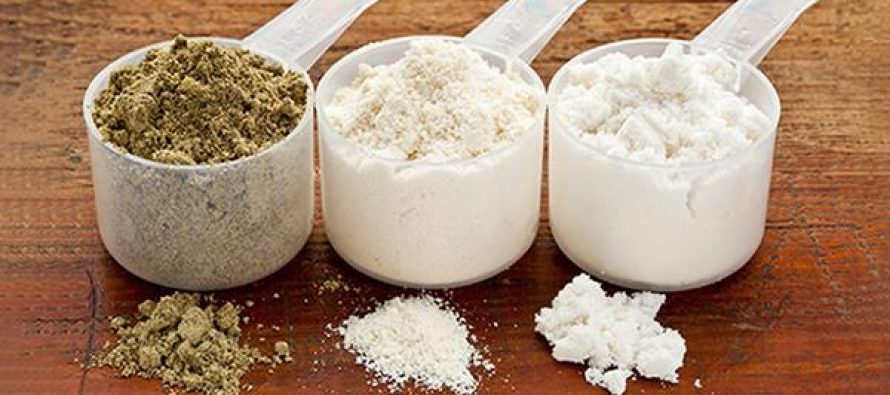
Protein powders are considered a staple of many person’s supplemental regimens, and for good reason too. Protein powders are cheap, simple, and effective. They can be used for fat loss, muscle-building, or for general health.

Recently, I have been asked about which protein powders are the best to use. I did a bit of research and have come up with the following information. Protein powders can fall under two main categories:

  • Animal-based proteins; and
  • Plant-based proteins.

There a many reasons to supplement with protein powders. Below is a list of situations where protein supplementation may be beneficial:

  • Post exercise recovery of muscle function and performance;
  • Increasing the duration or intensity of workouts;
  • Trying to gain weight or muscle mass;
  • Athletes participating in advance training;
  • Recovery from an injury or medical procedure;
  • Deciding to go vegetarian or vegan;
  • For the elderly.

Bio Availability (BV)
The BV is one way to measure a protein’s “usability”. The higher the BV, the greater the proportion of available protein that can be synthesized by the body’s cells. Note, BV scores are averages and does not refer to the amount of protein in the powder; it only refers to the usability of the protein in the powder.


Animal Based Proteins
Animal derived proteins are better overall than vegetarian derived. They are complete protein sources and are typically better absorbed and digested than their plant-based partners.


Whey (BV: 95-100)
The standard protein powder. Whey is derived from milk as the liquid component. It’s main benefits that make it stand apart from the rest are:

  • 25% branched-chain amino acid (BCAA) content by weight, approximately;
  • High cysteine and glutamine content, which aid in glutathione production and gut health; and
  • Fast absorption speed relative to other protein sources (1-3 hours).

Various forms exist, such as Whey Concentrate, Whey Isolate, and Hydrolyzed Whey (digested slowest to fastest).

Out of all protein sources, whey can also be seen as the “healthiest” due to it’s cysteine and glutamine content increasing levels of glutathione (an intrinsic anti-oxidant) in the body, and providing an abundance of glutamine for cells lining the gut.

The BCAA content is also notable as it is rich in the amino acid Leucine, which has many muscle-building properties in the body and is one of the most important amino acids to ingest in higher-than-normal doses with the goal of building muscle mass or retaining muscle mass when losing fat.

Casein (BV: 75-80)
The standard ‘slow release’ protein source. Casein is the curd (solid) portion of dairy protein. The typical benefits associated with casein supplementation are:

  • A very high insulin secretion value relative to other protein sources;
  • Slower absorption in the intestines;
  • Great evening protein source.

Casein is found in various forms such as Calcium Caseinate and Micellar Casein. These are generally slow digesting proteins (6-8 hours). These proteins are also a great source of dietary glutamine, which feed the cells lining the gut.

Casein is also a protein source that some people find difficult to digest. If you have any digestive issues with dairy products then I’d stay away from this.

Egg (BV: 100)
Egg protein is typically dehydrated egg white albumin. Egg’s main marketing points are:

  • An excellent bioavailability;
  • A balanced amino acid profile; and
  • Is a medium release protein source (3-6 hours).

Egg white protein is heat processed, so the biotin-binding compound called ‘Avidin’ (which may lead to biotin deficiency via consumption of raw egg whites) becomes a non-issue.

Collagen (BV: 90-95)
Collagen hydrolysate or Collagen Peptides are produced from collagen found in the bones, skin, and the connective tissue of animals. Collagen is the key structural protein that ensures the cohesion, elasticity, and regeneration of all of our connective tissues.

Supplementing collagen provides all the amino acids you need for connective tissue repair, and it thickens the skin for a more youthful appearance.

Some of the benefits of Collagen:

  • Gut bacteria turns collagen into butyric acid which is good for digestion;
  • Supports connective tissue repair;
  • Supports bone health;
  • Great protein source for people who can not tolerate dairy based proteins;
  • Has a high glycine content (an amino acid that increases Glutathione production which has been dubbed the master antioxidant).


Plant Based Proteins
Not as good as animal based protein powders. Various vegan options exist each with their own list of benefits and drawbacks. They generally do not have complete amino acid profiles and need to be paired with other sources to transform them into complete protein sources.

Soy (BV: 75-80)
Soy protein is a protein source based on soy beans. It’s main selling points are:

  • A complete vegan amino acid profile;
  • Hormonally active constituents that may benefit bone health and anti-cancer effects; and
  • Very high and diverse micronutrient profile.

Soy is a controversial topic. Soy itself in an unprocessed (food) and unfermented form has many noted downsides to it, including:

  • Protease and trypsin (intrinsic enzyme) inhibitors;
  • Disruptions to the estrogen / testosterone balance in the body (via phytoestrogens);
  • Disruptions to thyroid metabolism;
  • Lectin content;
  • Phytic acid and similar anti-nutrients.

The significance of these concerns are dependent on the form of the soy ingested (fermented, unfermented and raw, processed, etc), on the person ingesting it (post-menopausal women v. 20-year-old male) and in the dose consumed.

Rice (BV: 80-85)
Rice protein is a protein powder created from rice after the protein and carbohydrate sections have been separated by enzymatic treatment. Rice proteins main marketing points are:

  • Very easily digested (easy on the stomach);
  • Low allergen content.

It is usually paired with Pea / Gemma protein to get a more complete amino acid profile.

Pea / Gemma (BV: 70-75)
Can be seen as the ‘Whey’ of the vegan options. Pea protein is higher in the amino acids leucine, arginine, and glutamine. Pea protein’s main selling points are:

  • High leucine content;
  • High digestibility.

It is usually paired with rice protein in order to get a more complete amino acid profile.

Pea Proteins typically contain isoflavones, lectins and phytates and other anit-nutrients similar to soy.

Regarding Lectins, Phytates and similar anti-nutrients
Lectins are an extraordinarily sticky protein that particularly like carbohydrates (sugars). Once it enters into the small intestine, it has the tendency to stick to the intestinal epithelial cells, or as we’ve come to lovingly know them, the microvilli lining.

It’s here that the stage is set for yet another wonderful phenomenon known as leaky gut syndrome (I’ll save the rest for another post).

Much like lectins to carbohydrates, Phytates love to bind with calcium, iron, magnesium, and zinc. The take-away here is that due to the high amount of Phytate (found in cereals, grains and legumes), vegetarian and vegan diets are almost certainly deficient in calcium, iron, magnesium and zinc.

This is the main reason why smart supplementation, and timing is required when following plant-based diets.

In summary
Use the above information as a guide only. While supplementing with protein powders can help you reach your goals, the best option is to get as much of your daily protein requirement from your diet by eating plenty of lean meats, seafood and eggs.

My personal preference is using Whey Protein Concentrate or Collagen. They have complete amino acid profiles and have excellent bioavailability.

Noting that not everyone can tolerate dairy and other animal based products, or choose not to consume them for other reasons, there are suitable plant-based proteins on the market to help you reach your daily requirement.

The choice is yours.

Ancestral tips to better sleep, health and performance during the cooler months

As we move into the cooler, darker and shorter days of winter it becomes more difficult to maintain energy levels, productivity and fight off nasty colds and flu. These common complaints become the “norm” as the seasons change and people are constantly searching for the “magic bullet” supplement to keep them running on all cylinders.

Recent studies on the daily patterns of modern hunter gatherer tribes around the world may hold a few clues in how to keep yourself health and productive throughout the winter months.

How much sleep did our ancestors get?
Did our hunter-gatherer ancestors really go to bed as the sun went down, sleeping through the night for 8-10 hours, waking up with the sun? They definitely did not have mobile phones, laptops, external light sources keeping awake all night.

In 2015, a study was conducted on several modern hunter-gatherer tribes. The San of southern Africa, the Tsimane in Bolivia, and the Hadza in Tanzania. The study found that they only slept an average of 5.7 to 7.1 hours per night. Surprised? Most sleep research today suggests that most people are sleep deprived, averaging about 6.5 hours per night. This is approximately 1-2 hours less sleep than our grandparents got two generations ago. Experts today believe the general population should be aiming for 7-9 hours sleep per night for better health.

Although very important, there is more at play than simply the amount of sleep you get. Here are some of the key factors that could help improve your overall sleep and optimise your health and wellbeing this winter.

Go to bed earlier in the winter months
Looking at the tribes mentioned earlier in the study, we’ll see that they went to bed earlier during the darker days of winter / wet season and later in the summer / dry season. The average bedtime was around 9pm in the winter months, compared to about 10:45pm in the summer.

Today a lot of people struggle to get to bed before midnight (laptops, mobile devices and TVs don’t help) and usually don’t get to bed any earlier in the winter months. This lack of sleep has been shown in research to suppress the immune system, putting you at greater risk of developing an infection such as colds and flu.

Wake up consistently with the morning sun
Most people would agree that hitting the snooze button on your smartphone in the morning and sleeping in for another few minutes feels pretty good, but is it what your body really needs? The tribal groups in the study woke up at similar time each day of the year with the morning sun.

If you have ever done any real camping you would be aware how quickly you naturally get tired once the sun has gone down. Even in front of an open fire, the body begins to wind down and processes for sleep activate naturally. Waking up is just as easy once the sun has risen and the amount of light and temperature begins to rise.

Several key hormones are produced during a natural daily pattern or circadian rhythm that new research shows gets disrupted if you constantly change your sleeping and waking time. Disrupted circadian patterns have been shown to leave you more prone to fatigue, inflammation, weight gain and even change the balance of “good” to “bad” bacteria in your gut.

If you struggle with fatigue, insomnia or frequent colds and flu, aim to have a consistent bedtime and waking time this winter. Go to bed earlier (and don’t sleep in longer in the mornings) to help kick your snooze button habit in the morning.

Exposure to a lot of morning sunlight
It’s difficult to wake in the morning and get outside during the cold days of winter. Fatigue, lack of time and general desire to stay warm keep you huddled up in your house, car, and office. However, not exposing yourself to natural light may be having a significant negative impact on your health.

Modern hunter-gatherer communities get up daily with the morning sun and engage in the vast majority of their physical activity in the morning hours exposed to natural light. In contrast, most people are indoors all morning throughout the winter. Commuting in cars and working in buildings. Not getting nearly enough exposure to natural light. Even on a cloudy day, the natural light outside provides a massive 100,000-lux, compared to only 5,000-lux in your office or home.

There is research showing that this light exposure is crucial for circadian hormone production and thus your energy levels, health and resiliency. Try to get outside to grab your morning coffee, walk a few blocks, or go outdoors in the morning for a light run/jog to start your day. You’ll feel much better for it!

The take away
Just because the modern-day hunter-gatherers studied only got about 6.5 hours sleep per night does not mean it is the optimal amount for everybody.

Traditional hunter-gatherers may require less sleep than most people in modern-day societies, due to the fact that they are not exposed to artificial lighting, mobile devices, junk food, and all of the other sleep-disrupting factors that are a part of life in modern society, and therefore experience better quality sleep than most people.

Getting quality light exposure early in the day is crucial for circadian rhythm and will optimise your energy, health and resiliency.

Your individual sleep needs may in large part be determined by your health condition and physical activity levels, as well as your evening routine and sleeping environment. If you are in great health and prioritize the quality of your sleep, you may require less than 8 hours of sleep every night.

The game changer: loaded carries

Trying to find that right movement that will radically change your body.

Find that missing ingredient to your training programming that will help you build muscle faster, drop fat quicker, along with dominate on any field of play. For most of us it’s as simple as this.

The loaded carry.

Strength coach Dan John states that the loaded carry does more to expand athletic qualities than anything else out there. Because of their versatility, loaded carries can be used by anyone, anywhere. It doesn’t matter if your goal in to get stronger, build muscle, improve overall posture or even lose some body fat.

Loaded carries are very functional. Loaded carries basically work every muscle in the body. Shoulders and upper back, arms, core, and even your legs. By doing them you can improve your strength, stability, and conditioning all at once.

Some variations

Single-handed carries

  • Waiters walk. The weight is held with a straight arm overhead like a European waiter in a café. This is usually the lightest of the carries and does wonders for shoulders.
  • Suitcase walk. Grab the weight in one hand like a suitcase and walk. The obliques on the other side of the weight will want to have a discussion with you the next day.
  • Rack walk. Usually done with kettlebells, hold the ‘bell in the racked position, which is the weight on the chest, like a clean. This is a fairly remedial move but it can teach an athlete about how the abs work.

Two-handed carries

  • Press walk. This is simply a double waiter’s walk but the weights come alive as you move. Lighter weights are recommended.
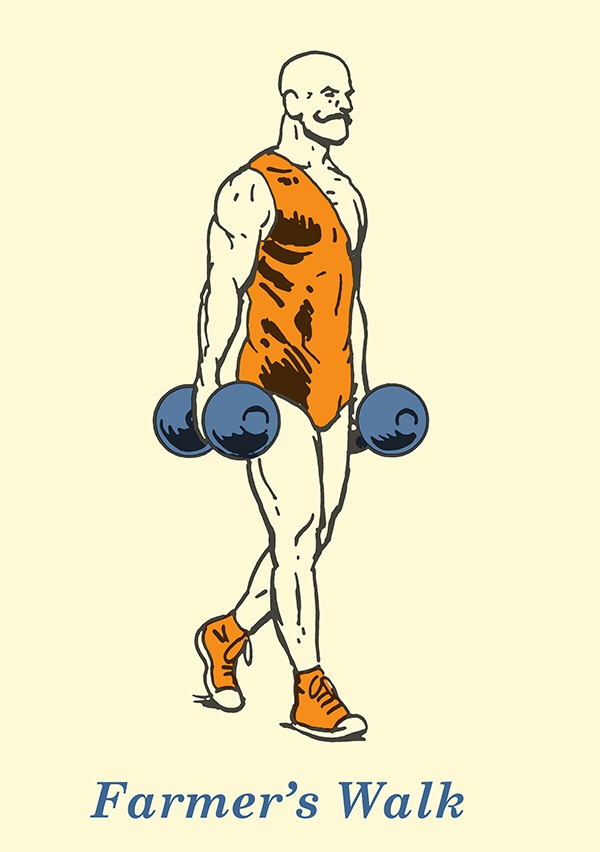
  • Farmers walk. The King of Carries. Go as heavy as you can with ‘bells in both hands, just like in a Strongman competition. This can be done really heavy for short distances or lighter for great distances. My favorite variation is really heavy for great distances.
  • Double rack walk. Same as above but with two kettlebells. Again, a learning move, but it’s a great way to teach the athlete to breathe under stress.
  • Cross walk. Waiter’s walk in one hand while doing the farmers walk in the other. It’s a very interesting way to teach the athlete to lock down the midsection during movement.

Sandbags, sleds, packs and vests

  • Sandbags are a great training tool. Bear hugs and shoulder carries are common variations. Just pick the sandbag up and carry it.
  • Sleds. Nothing crazy here, just add weight, attach a rope or harness and push, pull, drag, etc.
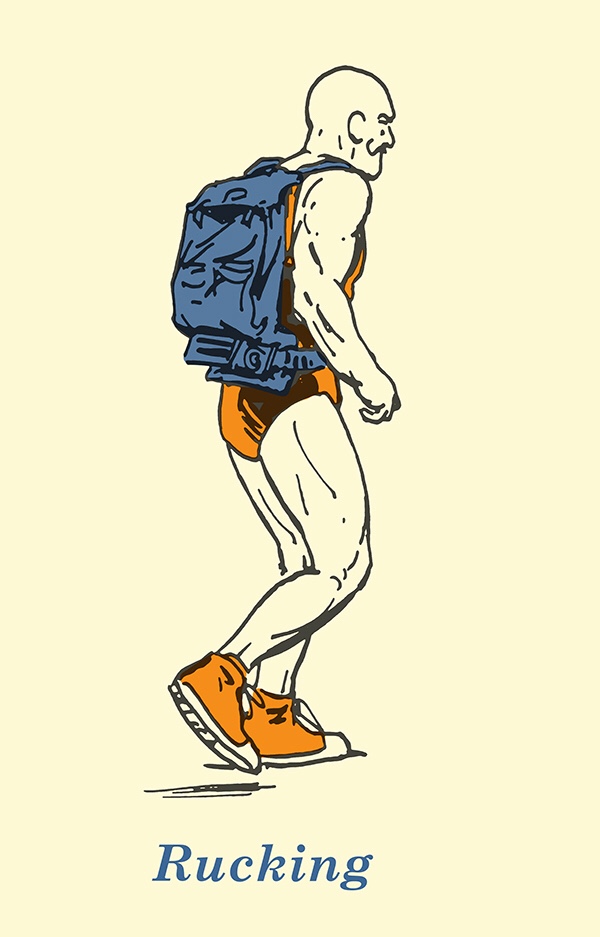
  • Packs and vests is just adding weight to a pack or vest and moving. Pretty simple stuff. My preference is to throw on a pack and get outdoors for a hike.

How often
Do some kind of loaded carry three times a week. Farmers walks and sled push / pulls are my personal favorite moves and tend to be some of the best bang-for-the-buck choices.

Final thoughts
I’ve used many of the variations listed above with success. I’ve found that they have contributed to building muscle, improve posture and body composition and have also helped with overall physical conditioning. As a result, loaded carries regularly find their way into my programming.

A month is all it takes. Try it and get back to me. Three times a week for a month. Obviously, your grip will be better. Your legs will be stronger. You’ll discover that the weight room isn’t that tough any more. You’ll look leaner, but be bigger.

A real game changer.

Supplementing with L-glutamine

532px-L-Glutamin_-_L-Glutamine.svg

What is it?
L-glutamine is the most abundant amino acid in the body, making up approximately 60% of free-form amino acids. Glutamine is highly in demand throughout the body. It is used in the gut and immune system extensively to maintain optimal performance.

When the body is under stress from heavy training, the level of glutamine in the muscles and blood decreases dramatically (up to 50%) as the body produces more white blood cells to fight infection and repair damaged muscle tissue. If the body’s stores of glutamine and capacity to produce it are inadequate to meet the demand, the risk of over-training, illness and injury increases.

Who needs it?
Glutamine has been studied since the 1960’s in the treatment of those suffering from trauma (such as burn, surgery, and disease victims).

To a lesser extent, research has been done on its benefits for athletes. Since athletes use a lot of their glutamine during intense training sessions and competitive events, they are more susceptible to illness, as the immune system relies heavily on this amino acid.

Becoming ill or losing lean muscle mass are signs of a deficiency.

Benefits of taking L-glutamine
Here are some of the ways that glutamine supplementation can boost performance and assist in overall health:

  • Glutamine has been linked to protein synthesis. It prevents your muscle from being eating itself;
  • Glutamine may serve to boost your immune system. For athletes, this is important since intense workouts tend to greatly deplete glutamine levels;
  • Helps maintain cell volume and hydration, speeding up wound and burn healing and recovery;
  • Increases growth hormone production and release;
  • Glutamine is a precursor to Glutathione (an important antioxidant);
  • Decreases recovery time from intense training sessions or competitive events;
  • Glutamine is one of the most important nutrients for your intestines. It has the ability to ‘repair a leaky gut’ by maintaining the structural integrity of the bowels; and
  • Glutamine can cure ulcers! Studies have found that 1.6 grams of glutamine per day had a 92% cure rate in 4 weeks.

PW_GLUTAMINE_500G

How much should be supplemented?
The dosage relative to the volume of intensity and duration hasn’t been well established, but it appears that supplementing with 5-10 grams on the days of very hard workouts and competitive events may be beneficial. The is no known downside from taking in L-glutamine at these levels, and any excess will be excreted in the urine.

When to supplement?
Take L-glutamine in the evening before bed or in the morning upon waking, when your muscles have been without significant nutrition for up to 8 hours. Research shows that L-glutamine can raise growth hormone levels significantly by taking 5-10 grams before bed.

Another good time for L-glutamine is within an hour post workout. This helps in the recovery process from demanding workouts.

Final Thoughts
Whether you’re looking at increasing your athletic performance, build muscle or improve a health condition such as leaky gut or diabetes, L-glutamine should be a part of your daily diet.

Evolutionary Fitness

Eat fresh wholefoods that we were evolved to eat. Usually three times a day but occasionally skip a meal, let hunger dictate your meals. Workout with short and intense resistance sessions a few times a week. Walk, play and stay active.

– Arthur De Vany, Ph.D.

art-devany-00
Arthur De Vany, Ph.D. In his 70’s, is 6ft 1in, weighs approx 190lbs and has about 10% body fat.

Arthur De Vany believes that we have virtually the same genetic makeup as our Paleolithic ancestors who lived 40,000 years ago. The problem, he and many others believe, is that our environment has changed dramatically.

De Vany contends that we would be healthier, fitter, and live longer if we adopted a modern version of the Paleolithic lifestyle. Having spent more than 30 years studying and practicing how to do that, he is regarded by many as the “grandfather” of the Paleo movement.

In this post I am going to sum up some of his basic principles and show you how to get started working out and eating how we evolved to for optimal health.

Nutritional Philosophy

To call a [low-carb] diet on which humans lived for millennia a fad is just ignorant. In fact, it is the modern fad of eating a high carb, high grain, high sugar diet that is harmful.

Arthur De Vany, Ph.D.

Cook by colour and texture so that meals look beautiful. If busy, skip meals with little worry. You don’t have to have three square meals a day. Snack on nuts or celery. Drink plenty of water. Also drink tea, coffee and a little wine.

Basically, eat animal proteins, vegetables, fruits, nuts and seeds. Full fat diary is fine if tolerated.

Carbohydrates

Avoid bread, muffins, bagels, pasta, white potatoes, cereals, vegetable oils, beans or anything in a package.

These foods are empty, high-calorie foods that are not only detrimental to your health, but are of no dietary requirement to the body.

Fats, Herbs and Spices for Flavour

Spice up your food with fresh ingredients such as basil, cayenne, garlic, parsley, rosemary, spring onions or tumeric.

Avocados, nuts and seeds, and use oils, such as coconut, macadamia and olive oil, for flavor.

Celery adds texture (and is good for testosterone too).

Fruits

Fresh fruits and berries of all sorts are good; They are good source of vitamins, minerals, fiber and antioxidants. De Vany focuses on melon and red grapes. Fruit juice is out.

I personally have one or two pieces of fruit most days. Mostly bananas or apples, as they’re readily available to me. I do rotate as different fruits and berries come in and out of season.

Fruits are one of the best ways for quick fresh energy.

Vegetables

Eat lots of fresh raw, steamed, sauteed or grilled vegetables. Try not to use frozen, canned or packaged vegetables, although they are generally better than no vegetables.

Protein

Eat plenty of meat, such as ribs, steak, bacon, pork loin, turkey and chicken, but trim excess fat from the edges. Fish, seafood and eggs are also excellent choices. Don’t forget your organ meats, liver is one of the most nutrient dense foods available.

Try to have protein with most meals as it will improve satiety and keep you feeling fuller longer.

Intermittent Fasting

Our ancestors lived with feast and famine. Research indicates that chronic or intermittent fasting improves health. I do it the easy way. Never chronically; your mind and body will not accept it. And you will lose vital lean body mass; muscle and organ mass. Easy intermittent fasting is skipping meals randomly and eating to fill later.

Don’t be afraid to skip a meal and prolong your overnight fasts, I often workout first thing in the morning totally fasted (maybe a cup of coffee and some BCAA’s) and do not eat for up to  an hour afterwards.

This is great for Growth Hormone release and will boost lean muscle growth and accelerate fat loss.

Training Philosophy

Physically and genetically, we are built to run fast and climb trees easily. But few of us over the age of 11 do so. Which is why we’re now at the gym.

– Arthur De Vany, Ph.D.

DeVany is an advocate of intense intermittent training, keeping your workouts short and simple training with weights for no more that a couple 20-30 minute short intense sessions a week. He has based his training model on Power Law Training. You can read De Vany’s paper titled Evolutionary Fitness here.

art-devany-01

The Rules

Follow the “15-8-4″ routine:

  • Do a set of 15, a set of 8, and a set of 4 repetitions for each exercise using progressively more weight on the latter two sets if you can.

Keep moving:

  • Do not rest between sets or exercises. Try to average 10-15 seconds (or as long as it takes to set up the next exercise) in between sets.

Keep your workouts very short and intense:

  • Get in and out of the gym in 45 minutes or less.

Work out no more than once or twice a week:

  • Pick a random day and don’t do it on the same day always.

Exercise the major muscle groups:

  • Conduct exercises such as the dead lift, squat, bench press, bent over row, upright row, overhead press and farmer’s walks.
  • Body weight exercises like the pushup and pullup.
  • Do free body exercises at a fairly fast pace during the concentric phase and a rather slower pace during the eccentric phase.

Protect your heart:

  • Do not grip things too hard and stay loose so the blood flow is not constricted by clenched hands and teeth.
  • Don’t hold your breath, and be sure to exhale as you push or pull the weight.

Protect your spine:

  • Do the abdominal brace, contracting the erectors of the back and pushing the abdominal muscles out a bit and contracting them.
  • Maintain the curvature of your spine and pivot from the hips rather than bending the spine.
  • Use your legs versus your back when lifting and don’t be afraid to use lower weights – especially with dead-lifts.

Hanging Ab Sets:

  • Find a pull up bar and hang from it with your knees at waist level. Hold as long as you can. Repeat 2 more times.

Standing Crane:

  • A yoga balance-building move where you stand on one leg, stretch the other leg out behind you, and position your body parallel to the floor.

De Vany doesn’t believe in long cardio work like mid level intensity jogging and prefers to walk, hike and play sports to keep that side of fitness in check.

He also recommends high intensity, short duration sprint work on occasion to add variation to your training. This will promote specific hormone drives that quench hyperinsulinemia and build muscle and bone density that keep you young and lean.

In a Nutshell

  • Eat fresh wholefoods that we were evolved to eat (Art is not a believer in starchy foods);
  • Usually three times a day but occasionally skip a meal, let hunger dictate your meals;
  • Workout with short and intense resistance sessions a few times a week;
  • Walk, play and stay active.

The beauty of the Evolutionary Fitness model that De Vany has created is that it seems so simple but it allows so much room for adaptation to your own needs. This article is a very basic summing up of the principles and there is a lot more to it and a lot more one can learn.

You can check out his book, The De Vany Diet here.

Skinny Fat

Skinny Fat: A physique, while not overweight (and possibly underweight), lacks any visible lean, striated tissue.

– Definition, Urban Dictionary

Conventional wisdom would suggest that if you are overweight you are generally unhealthy, and if you are thin, you are healthy. However, new research points to just how dangerous being skinny can be. Well, if you are a “skinny fat” person, that is.

The medical term for this is metabolically obese normal weight (MONW), or skinny fat. Basically, this means that you are carrying too much body fat and not enough lean muscle (generally belly fat).

Women are more commonly to be hit with MONW syndrome or skinny fat than men. A common theory is that men usually aren’t afraid to lift weight in the gym (and, to be fair, men naturally have more lean muscle than women).

On the other hand, women generally have the misconception that lifting weights immediately makes you look big and bulky (which couldn’t any further from the truth) and prefer group fitness classes like as Zumba and/or Aerobics or spend all of their time on the treadmill, stairmaster or a spin bike, not to mention inventing a million bizarre weight loss diets (with equally bizarre names).

Simply dieting can eliminate weight, but it will not strengthen anything. Also, because of physiology unique to women, the fat cells in the lower body just happen to be world-class hoarders.

Starting at an early age
In America, studies on teenagers found that 37% of skinny children had one or more signs of pre-diabetes, such as high blood pressure, high blood sugar, or high cholesterol. Yes. You read correctly. Almost 4 out of 10 normal-weight children are pre-diabetic!

Nearly one-third of children are overweight or obese in the America. However, it appears that only 20% are healthy. This means that 8 out of 10 children in America are either overweight or have pre-diabetes or type-2 diabetes. Countries like Australia aren’t that far behind.

Processed and fast foods, video games, social media sources, reduced sleep quality and inactivity are all causative factors in developing these conditions in children.

It probably isn’t helping that many of the role models in our society aren’t exactly the picture of health, ie: skinny runway models, or super skinny guys without an ounce of masculinity in them. Whatever happened to the track and field champions of past Olympic Games? Fast, fit, strong, conditioned men and women able to compete in multiple events.

skinnyfat

Health issues related to Skinny Fat Syndrome
A person who is skinny fat is susceptible to the following conditions (but not limited to):

  • Diabetes;
  • Cardiovascular disease;
  • Osteoporosis;
  • Fragile bones from calcium and other nutrient deficiencies;
  • Elevated blood pressure and cholesterol;
  • Chronically low energy levels; and
  • Infertility (both men and women).

How does a person become Skinny Fat?
In no particular order, these are several of the most common ways a person can become skinny fat:

  • Eat a vegetarian or vegan diet. If you don’t eat any meat, the body will eat itself instead;
  • Eating lots of Gluten. Lectins, phytates and other anti-nutrirents setting the stage for systemic inflammation that damages the digestive tract making it harder to utilize nutrients from the rest of your diet.
  • Excessive cardio. Training your body to be catabolic, breaking down muscle tissue and to store fat;
  • Fat burning pills. Potential short-term fat burners, but in the long run they are more muscle burners and long-term fat storers;
  • Not lifting weights… Ever. Do I even need to comment here?

How to turn it all around
Reversing the effects of skinny fat syndrome is very similar to that of someone who is overweight and pre-diabetic. Using the following steps one can easily turn it all around start improving their quality of life:

  • Eat a nutrient dense, low glycemic load diet (basically a whole food or Paleo type diet). Lean meats, seafood, eggs, fruits, vegetables, healthful oils, nuts and seeds;
  • Avoid flours and sugars. Including gluten-free flour products. Even whole grain flour acts like sugar in your body;
  • Don’t drink your calories. It’s always better to chew you calories. No soft drinks, juices, sweetened drinks. Reduce alcohol to no more than 2-4 glasses of wine per week;
  • Lift and move your body. A training routine that combines both strength and cardio is important;
  • Sleep well. Sleep deprivation alters the metabolism and increases cravings for carbohydrates and sugars. Aim for 7 or more hours per night; and
  • Did I say lift? I can’t stress this enough. A simple solution to many of the problems women face. Osteoporosis, the beach season, the belly fat that wont budge… weight-bearing physical activity is the answer.

What is most alarming is that many people who think they get a pass because they are thin should actually be taking a second look at their health. It is possible to be skinny and sick and be metabolically obese, which is potentially even more dangerous.

The good news is that it is a solvable condition. By following the above points or speaking with your medical practitioner you will be well on the way to becoming a healthier person that is full of energy and has a much better overall body composition.

An introduction into kettlebell training

What is a kettlebell?

It’s a cannonball with a handle. It’s an extreme handheld gym. It’s a great strength and conditioning tool.

The kettlebell can deliver high level all-around fitness. Functional strength. Staying power. Flexibility and mobility. Fat loss without the dishonor of an aerobics class. Kettlebells can be used virtually anywhere.

Kettlebells are traditionally measured in poods. An old Russian unit of measure, a single pood weighs 16 kilograms (kg).

The general rule of thumb is that men should start with a 16 kg kettlebell. An experienced athlete can start with a 24 kg kettlebell.

For women, it is suggested that they start with an 8 kg kettlebell and 12 kg if they’re an experienced athlete.

Kettlebell safety 101
Below is a short list of rules on how to use a kettlebell safely as stated in the book Enter the Kettlebell written by kettlebell master trainer Pavel Tsatsouline.

  • Check with you doctor before you start training;
  • Always be aware of your surroundings;
  • Wear flat shoes;
  • Never, never contest for space with a kettlebell;
  • Practice all safety measures at all times;
  • Keep moving once your heart rate is high;
  • Build up your training load gradually using common sense, and always listen to your body;
  • Instruction can not cover all contingencies, and there is no substitute for good judgement.

The kettlebell sumo deadlift
The first movement to master is the kettlebell sumo deadlift. This movement requires the athlete to safely pick up the kettlebell from the floor.

Taking a comfortable stance, with feet slightly turned out. Sit back as you would in a high chair, and pick up the kettlebell with both hands by extending your hips and knees.

1d7c7f931968d1b979ac625b6870e8f8

The checklist:

  • Your arms are straight; the legs are doing all the lifting.
  • Your knees are pointing in the same direction as your slightly turned-out feet.
  • Your heels are planted. You are sitting back, rather than dipping down or bending forward.
  • Your back stays straight throughout. Don’t confuse “straight” with “vertical”! “Straight” in this context means “not rounded.”
  • You are looking straight ahead, not up or down, at all times.

Once you have mastered this simple and functional movement you will be ready to progress on to more advance kettlebell movements such as:

  • The kettlebell swing;
  • The kettlebell get-up;
  • The kettlebell snatch.

I have personally used kettlebells with great success over the years and can attribute a large part of my own physical conditioning to the kettlebell.

The Burpee: the ultimate conditioning tool

The burpee is a staple in many conditioning routines, and for good reason. This simple exercise can be done almost anywhere, by almost anyone.

To perform a Burpee:

  • Begin in a squat position with hands on the floor in front of you.
  • Kick your feet back, while simultaneously lowering yourself into the bottom portion of a pushup. Your arms will not be extended.
  • Immediately return your feet to the squat position, while simultaneously pushing “up” with your arms. You will perform a pushup as you return your feet to the squat position.
  • Leap up as high as possible from the squat position. Repeat, moving as fast as possible.

burpee-explained

Burpee benefits
Some of the benefits of adding burpees to your workout routine:

  • Strength;
  • Total body conditioning;
  • Improved anaerobic capacity;
  • Improved body composition; and
  • Weight loss.

It’s not a Squat Thrust
At first glance, you may associate the burpee with a traditional squat thrust. Squat Thrusts are typically performed without the vertical jump. With a squat thrust, you simply “stand up” before returning to the squat position. Squat thrusts are much easier than explosive burpees.

Variations
There are many variations to performing burpees. Some will lower the intensity, while others will increase it. They include:

  • Burpees without a push-up;
  • Dumbell Burpees;
  • Weighted Vest Burpees; and
  • Medicine Ball Burpees.

With or without weighted resistance (dumbbells, vests, medicine balls, etc.), a regular dose of burpee conditioning will provide immediate, and drastic improvements in your physical fitness.

Burpee Intervals
Burpee Intervals are one of the best conditioning drills. Here is one of my favorite Burpee conditioning workouts from Infinite Intensity by Ross Enamait.

Begin with 30 seconds of Burpees, and immediately follow with 30 seconds of shadow boxing. Continue this pattern for a full 2 or 3-minute round.

The Round

  • 30 sec x Burpees;
  • 30 sec x shadow boxing.

Beginners

  • 4 x 2-minute rounds with 1 minute of rest between rounds.

Intermediate

  • 6 x 2-minute rounds with 1 minute of rest between rounds; or
  • 4 x 3-minute rounds with 1 minute of rest between rounds.

Advanced

  • 6 x 3-minute rounds with 1 minute of rest between rounds.

Master

  • 6 x 3-minute rounds with 30 seconds of rest between rounds.

Energy systems of the body (simplified)

ATP broken down

The first thing to remember is that ANY muscle contraction or physical effort is due to a molecule called adenosine triphosphate (ATP). When an ATP molecule is combined with water the last of three phosphate groups splits apart and produces energy. This breakdown of ATP for muscle contraction results in adenosine diphosphate (ADP). The limited stores of ATP must be replenished for the physical effort to continue; so chemical reactions take place to add a phosphate group back to ADP to make ATP.

How ATP is produced
Take three different activities and put them on a continuum. On one end would be a quick, explosive burst such as throwing a punch. On the other end would be an extended, lower-level event such as walking five miles. Between the two could be anything. An intense twenty-second activity, one minute of constant force exertion, or a five-minute event with varied intensities of effort.

The three energy systems
Conventionally, there are three energy systems that produce ATP:

  • ATP-PC;
  • Glycolytic or lactic acid;
  • Aerobic or oxidative.

All systems are available and “turn on” at the onset of any activity. What dictates which one (or two) is relied upon the most is the effort required.

ATP-PC system – maximum power / short duration
ATP and phosphocreatine (PC) compose the ATP-PC system, also sometimes called the Phosphogen system. It is immediate and functions without oxygen. It allows for up to approximately 12 seconds (+ or -) of maximum effort. During the first few seconds of any activity, stored ATP supplies the energy. For a few more seconds beyond that, PC cushions the decline of ATP until there is a shift to another energy system.

Examples:

  • 100m sprint;
  • Discus throw;
  • Weight lifting.

100m-final.jpg

Lactic acid system – moderate power / moderate duration
Now it becomes more complicated as the energy demands shift to this system. The glycolytic or lactic acid system is the “next in line” tool after the ATP-PC system runs its course. Dietary carbohydrates supply glucose that circulates in the blood or is stored as glycogen in the muscles and the liver. Blood glucose and/or stored glycogen is broken down to create ATP through the process of glycolysis. Like the ATP-PC system, oxygen is not required for the actual process of glycolysis (but it does play a role with the by-product of glycolysis: pyruvic acid).

Here is where it gets interesting. After maximum power declines around 12 seconds, further intense activity up to approximately 30 seconds results in lactic acid accumulation, a decrease in power, and consequent muscle fatigue. This high, extended effort is labeled “fast” glycolysis. Exerting further effort up to approximately 60 seconds results in another drop in power due to the shift in dependence on the oxidative system.

Enter “slow” glycolysis into the discussion. Remember that the by-product of glycolysis is pyruvic acid. In fast glycolysis, more power can be generated, but pyruvic acid is converted to lactic acid and fatigue ensues quickly. Slow glycolysis is different. Relatively less power is generated, but pyruvic acid is converted to acetyl coenzyme A (acA), fed through the oxidative Krebs cycle, more ATP is produced, and fatigue is delayed.

Examples:

  • 400m sprint;
  • 800m sprint.

caitlin_001.jpg

Aerobic system – low power / long duration
Your maximal effort was fueled initially by the ATP-PC, but your performance declines. Continued effort results in further decline, either via fast glycolysis (quick decline) or slow glycolysis (slower decline). You’re now entering the complex world of the low power but longer duration aerobic or oxidative system.

Examples:

  • 5km run;
  • long distance running or walking.

The effort demand is low, but ATP in this system can be produced three ways:

  • Krebs cycle;
  • Electron transport chain;
  • Beta oxidation..

First, the science. The Krebs cycle is a sequence of chemical reactions that continues to oxidize the glucose that was initiated during glycolysis. Remember the acA? It enters the Krebs cycle, is broken down in to carbon dioxide and hydrogen, and “bang” two more ATP molecules are formed.

The problem is, the hydrogen produced in the Krebs’s cycle and during glycolysis causes the muscle to become too acidic if not tended to. To alleviate this, hydrogen combines with several enzymes and is sent to the electron transport chain. Through more chemical reactions in the electron transport chain, hydrogen combines with oxygen, water is produced, and acidity is prevented. Notice this takes time due to the need of oxygen, which is why the oxidative energy takes a while and intensity of effort declines (i.e., max effort sprints become a slow jog/walk).

The Krebs cycle and the electron transport chain metabolize triglycerides (stored fat) and carbohydrates to produce ATP. The breakdown of triglycerides is called lipolysis. The byproducts of lipolysis are glycerol and free fatty acids. However, before free fatty acids can enter the Krebs cycle they must enter the process of beta oxidation, where a series of chemical reactions downgrades them to acA and hydrogen. The acA now enters the Krebs cycle and fat is metabolized just like carbohydrates.

Simply put…
Due to the time-line, the aerobic system provides energy much more slowly than the other two systems, but has an almost unlimited supply (in your adipose tissue – yeah, that fatty stuff you can pinch). The aerobic system by itself is used primarily during complete rest and low-intensity activity. It can produce ATP through either fats (fatty acids) or carbohydrates (glucose).

Hopefully that was simple enough to understand. It is important to have a basic understanding of these energy systems when developing a training program for everybody ranging from the weekend warrior to the elite level athlete.