Caffeine and athletic performance

GettyImages-5595393451-58e6d9135f9b58ef7e217e43

Having a cup of coffee first thing in the morning or to push through the mid-afternoon slump is a pretty standard thing for most people. Caffeine is a stimulant. It will give you a bit of buzz.

It makes sense that using caffeine to supercharge athletic performance.

What is Caffeine
Caffeine is a naturally occurring stimulant found in leaves, nuts and seeds of numerous plants. Its widespread social acceptance means that many athletes consume caffeine regularly over the day in varying amounts from coffee, tea, cola, energy drinks and, increasingly, from pre-workout supplements or caffeinated sports products.

Caffeine-containing beverages typically contain between 30-120mg of caffeine but this varies widely between products and brands.

Caffeine is becoming increasingly popular in sport to help improve performance and various caffeinated supplements and sports products are now being marketed to and consumed exclusively by athletes.

Caffeine and performance
The main performance benefits of caffeine appear to come from its influence on the central nervous system and resulting reduced perception of effort (exercise feels easier) and/or reduced perception of fatigue. 

Some other ways that caffeine can help improve mental and physical performance are as follows:

  • Caffeine can increase the body’s ability to burn fat via lipolysis, or the breakdown of stored fatty acids within the fat cells;
  • Caffeine has been shown to increase thermogenesis, or heat production, which helps you burn more calories;
  • Caffeine can raise endorphins, which increase feelings of happiness, giving you the exercise “buzz” that people often experience after working out;
  • Caffeine may also spare glycogen stores (carbohydrate stored within the muscles), primarily due to increased fat burning. This can enhance endurance performance.

Endurace exercise
Most of exercise/caffeine research is based on endurance training and performance. Historically, the most often cited benefit to consuming caffeine before a race or training activity was that it would increase the oxidation of fat, thus sparing muscle glycogen for when you really needed it, such as the final sprint to the finish line.

Maybe the caffeine simply makes exercise more tolerable, makes muscles work harder and better, and allows those exercising to do so harder, and for longer. Caffeine generally will give you a bit of a buzz. When taken prior to a workout, this “buzz” equates to an increased endorphin response to exercise.

So, if endorphins are high, exercise is more tolerable, even enjoyable.

The bottom line is that caffeine seems to boost athletic performance in endurance events, maybe through enhancing energy partitioning or an increase exercise induced endorphin response, make the activity more enjoyable.

Strength exercise
The effects of caffeine in sport aren’t limited to improving endurance. Research also indicates the benefits of caffeine in strength performance.

Whilst the results of studies are varied, they generally suggest that supplementation may help trained strength and power athletes.

This meta analysis, comparing 27 studies found that caffeine may improve leg muscle power by up to 7%, but had little effect on smaller muscle groups

Caffeine may also improve muscular endurance, including the amount of repetitions performed at a certain weight.

To summarise, most research indicates that caffeine may provide the most benefits for power-based activities that use large muscle groups, repetitions or circuits.

How to use caffeine for performance
Although early research was conducted using high doses of caffeine (6+ mg caffeine / kg body weight), more recent research indicates that lower doses can provide similar performance benefits with less negative side effects.

Individual responses to caffeine vary but typically doses in the range 1-3 mg caffeine per kg body weight are sufficient to improve performance (e.g. 70-210mg for a 70kg athlete).

Some experimenting may need to be done to determine the most beneficial timing protocol, which may include taking caffeine:

  • Pre-competition or exercise;
  • During competition or exercise;
  • A combination of both.

Potential side effects
High levels of caffeine intake can cause declines in performance through:

  • Increased heart rate;
  • Impaired fine motor control;
  • Anxiety and over-arousal;
  • Sleep disturbances;
  • Gastrointestinal upset.

Like any other supplement, it is important to trial smaller doses first in training activities prior to race day to assess individual tolerance and responses.

In Summary
The incorporation of caffeine into an athlete’s nutrition plan should be considered on an individual basis.

Caffeine is one of the most effective exercise performance supplements available. It is also very cheap and relatively safe to use.

Many studies have shown that caffeine can benefit endurance performance, high-intensity exercise and power sports.

The recommended dose varies by body weight, but is typically about 200–400 mg, taken 30–60 minutes before a workout.
The benefits of sled training

sled-1254x640

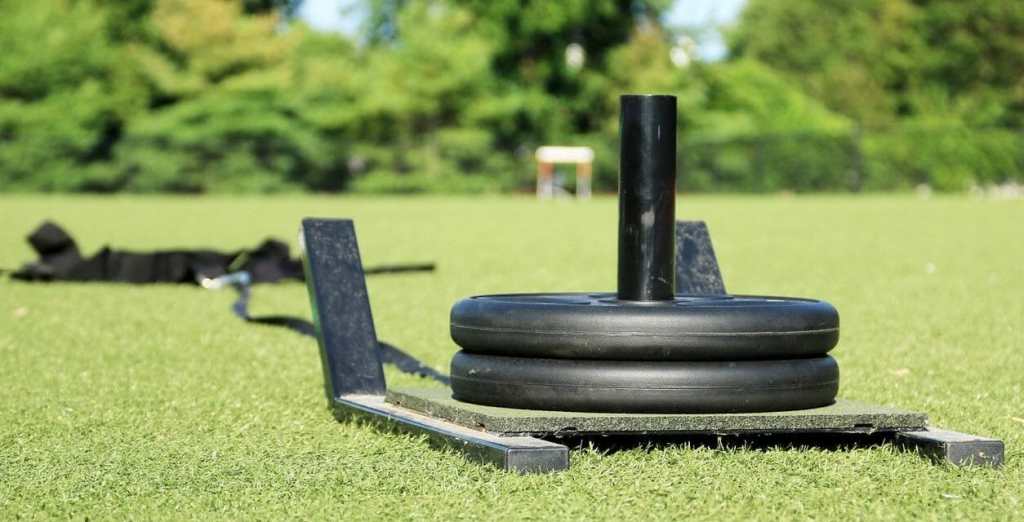
Do you want to get leaner, build some muscle and improve overall physical conditioning? Try adding some sled training to your workouts.

Sled training is a highly effective and fun (sometimes) training modality that can be used in a variety of ways to improve general conditioning and non-specific athletic performance.

Here are some of the benefits of sled training.

Improved GPP
General Physical Preparedness (GPP), is the non-specific ability to be physically fit. Can you lift weight off the ground, push it overhead or carry it for distance? All of these things are GPP.

Improved body composition
Sled training is hard work. It’s also an awesome tool to build lean muscle mass and increase fat loss. There are many variations that can boost your metabolic rate and increase muscle mass. As you will be using you entire body as a machine, it can develop muscular density and hypertrophy, whilst also increasing fat loss.

Develops functional strength and acceleration
Sled training uses just about every muscle in the body whilst conducting real world movement patterns. It has to work as a complete machine in order to generate the force required to move the sled the required distances, developing overall strength and conditioning in the process.

Acceleration is a critical element in almost any sport, athletes are always working on developing their acceleration. Sled training can be programmed as a form of sprint conditioning, by forcing the body to move with speed against a controlled resistance, thus improving overall speed and power.

It’s simple, but hard work
Sled workouts are easy to program. Just load the weight and push, pull or drag. It will be hard work. It will elevate your heart rate to near max, it will leave you gasping for air and fatigue your entire body. It will make you better overall and generally harder to kill. Hard work pays off.

A lot of gyms are starting to add weighted sleds into their functional training areas, so if your gym has one, try giving it a shot for a few weeks. If your gym doesn’t have a sled or functional training area, then you should consider changing gyms.

The addition of sled training alone will make the move worth it.

Five… or seven basic human movement patterns

Farmers-Walk

Commonly, when you talk to somebody in the gym about programming or training they will always tell you how much they can bench or sometimes how often they squat.

A lot of people will tend to talk about the pushing or squatting movements. Sometimes they might say they do a few pull-ups here and there. The major focus is on the musculature that they can see. This not optimal for anybody, from the elite athlete to the occasional weekend warrior.

There are five basic human movement patterns.

You will always hear about the push, the pull, and the squat. Occasionally, you will hear about the hinge. The final basic movement is the loaded carry.

Some examples of the five basic movement patterns:

Push
Push-up, bench press, overhead press and dips.

Pull
Pull-up, cleans, rows and pull-downs.

Squat
Goblet squat, back squat, lunge and leg press.

Hinge
Deadlift and the kettlebell swing.

Loaded Carry
Farmers walk, suitcase walk, waiters walk, rack walks.

The five movement patterns in order of popularity:

  1. Push;
  2. Pull;
  3. Squat;
  4. Hinge;
  5. Loaded Carry.

Now, if you were place these movements in order of how they could impact you almost overnight, the order would look more like this:

  1. Loaded Carry;
  2. Squat;
  3. Hinge;
  4. Pull;
  5. Push.

Further to these movement patterns, you could add the following:

  1. Rotation;
  2. Counter-rotation.

This is basically creating, or eliminating force through the torso whilst the hips and/or shoulders move. It also helps the body stabilise the spine in the event of external forces being applied to the body.

Examples of these additional movements include:

Rotation
Russian twist, medicine ball rotational throw and sledgehammer swings.

Counter-rotation
Single-arm suitcase carry, single-arm swings, renegade rows and unilateral loaded deadlifts.

Programming workouts
When programming, just adding some form of loaded carry to you strength training can make huge impacts in just three or four weeks! Even if it is something simple like the farmers walk. I four weeks, you will be better. Your body will have improved posture and overall muscle density, which will transition across all of the other lifts.

A simple way to program is to choose an exercise from each of these basic movements and create a total body workout. Alternatively, you could combine two movements, such as a push / pull combination and squat / hinge combination and add the loaded carry to each workout.

Rotation and counter rotation exercises can be added to any workout for a more complete workout.

Training programs don’t need to be complex to work. Most of the time, the simple stuff works.

Four foods that can boost athletic performance

usain-bolt-sprinting

With more and more people looking into whole food, ancestral or evolutionary type diets, more and more athletes are choosing to adopt a paleo-based approach to eating in order to improve their overall performance.

One of the reasons I believe that a paleo type diet is the best template for athletes to build a perfect personalized diet is because, by definition, it includes all of the key factors needed to be healthy, recover well and perform at your best when exercising intensely.

Here are a few foods that can boost physical performance and should be a staple for almost all athletes.

Eggs
Eggs are the most complete source of amino acids and rank the highest when it comes to assessing protein quality based on their biological value.

A single egg contains roughly seven grams of complete protein and contains all of the eight essential amino acids required to build and maintain muscle.

Eggs are loaded with B-vitamins, a great source of vitamins B1, B2, B6, and B12. Eggs also contain a lot of choline, a vitamin-like essential nutrient that’s similar to B-vitamins that supports proper brain function, and is sometimes used by athletes to delay fatigue in endurance sports.

Eggs are also an excellent source of zinc, which optimizes testosterone production and the building of lean muscle mass, and also a pretty good source of magnesium, which is essential for over 300 cellular functions and is linked to improved intra-workout recovery and better quality sleep.

Egg yolks are one of the few foods that naturally contain vitamin D, making it a convenient way to up your intake without having to sit out in the sun. Vitamin D is essential for strong bones and muscles, as well as overall health.

Eggs also contain iron which is required to produce haemoglobin, which carries oxygen throughout the body.

A complete amino acid profile, a ton of micronutrients, all great for athletes, and surprisingly low-calorie equals one nutrient dense food source for optimising performance.

Grass-fed Butter
For the last 30 years or so, saturated fats like butter have been erroneously considered the number one enemy in conventional medicine, supposedly responsible for heart disease and poor health. However, the scientific community is now clear that saturated fats aren’t bad for us, and in fact are extremely important for overall health.

Grass-fed Butter is literally a Superfood. Nutrient wise it’s very high in Vitamins A, D, E and K2. These vitamins are responsible for hormonal balancing, and cardiovascular health. Magnesium and Zinc are also huge players in the game. By consuming Grass-fed Butter you can balance calcium levels, repair muscles and provide adequate energy during training.

Grass-fed Butter can provide 20 times more ATP during cellular metabolism than can be gained by eating all sorts of processed grains and sugars.

Saturated fats play a critical role on a couple of fronts. First, they are shown to help athletes recover from intense exercise and over-training. Studies have found that athletes who are rundown during periods of intense training typically have low cortisol and low testosterone levels, to go along with fatigue, excessive delayed onset muscle soreness, low libido and low mood… all symptoms of over-training.

Saturated fats can also be a great tool for endurance athletes, because unlike most fats they can be absorbed directly by the gut and used for instant energy. This means the medium chain triglycerides in butter can effectively be used like carbohydrates for energy during runs, rides, swims, or metabolic conditioning.

You get 9 calories when using fats for fuel versus 4 calories when using carbohydrates, so you dramatically improve your fuel efficiency. This can translate into better performance.

Beets
The consumption of large quantities of beets has been found to dramatically increase blood nitrate levels, and in turn boost athletic performance.

This promotes nitric oxide formation, which is a powerful vasodilator that helps increase blood flow to working muscles allowing your mitochondria to produce ATP more efficiently. This creates an ‘anti-fatigue’ effect, meaning you can do the same amount of work for longer period with less stress to the body, producing significant endurance benefits in athletes.

Load up on beet juice daily for five or so days before a competition or consume as a regular part of your diet to reap the benefits.

Coffee
Not necessarily an ancestral or traditional food, coffee can provide a terrific performance boost. There are countless performance-enhancing supplements that are now available on the market, some of them better than others. The best however, if you’re looking to improve your performance, is a the classic cup of black coffee.

Caffeine, found naturally in tea and coffee, is truly one of the best performance-enhancing drugs in the world. In fact, supplemental caffeine is the “secret” ingredient in virtually all the marketed weight loss and performance supplements because it’s so effective.

What can caffeine do for you?

A cup of black coffee is all you need for a natural stimulant and effective pre-workout. Several studies have shown caffeine to boost athletic performance and improve a variety of other health markers.

The effects will vary from person to person, but the peak stimulant effect usually occurs 30-60 minutes after consumption. Once it enters the bloodstream, several responses begin to occur within the body. Heart rate and blood pressure increase, which in turn delivers oxygen to the muscles at a faster rate and fat stores begin to metabolize and are released into the bloodstream. This typically will lead to you feeling energised and ready to workout.

With regards to athletic performance, caffeine has been shown to increase various types of performance when consumed in moderate amounts.

Caffeine has also been shown to give the athlete the ability to train for longer duration and with a higher power output. It has also been shown to improve overall endurance and resistance to fatigue.

Endurance athletes probably benefit the most from the consumption of caffeine. This may be due to the point mentioned above where caffeine consumption can increase the breakdown of fat stores to be used as energy, thus saving stored glycogen for when it is needed most, such as the increased intensity of a sprint to the finish line.

Why women should be lifting heavier

4-Reasons-Women-Must-Deadlift

Just about everybody will agree that women will benefit from lifting weights. With the introduction of modalities like Crossfit and F45 in recent years, weight training amongst women has gained popularity, and more and more of these women have been successful in their training endeavours like never before.

That being said, the reality is that is still less popular for women to be lifting heavy weights. This is the 1 to 5 repetition range that can get you real strong and lean. 

Here are some of the best reasons why women should be lifting a little heavier.

Improved body composition
Basically, this means less body fat and stronger curves. Which woman doesn’t want that? Most women join a gym and start lifting weights as part of a plan to lose unwanted body fat, but they don’t have a real goal or training end state.

They might follow a simple weight training program that will suggest moderately heavy weight in the 8 to 15 repetition range, or attend several high intensity group classes. Eventually, these workouts will feel easy, or boring, and it will be necessary to find a new challenge to keep the body positively adapting to the physical workload. 

If you have successfully mastered key movements like the squat and deadlift it may be time to lift some heavier loads with lower repetitions to increase your muscular density and strength. 

The stronger you get, the easier it will be to positively transform your body with continued training.

The take away point here is that lifting heavier weights develops muscular density. You will not see the serious muscle growth like some of the top bodybuilders and Crossfit athletes. That actually take years of intense training, combined with eating a lot of calories and targeted supplementation. You will however, develop the sleek sculpted curves that most women are thinking about when they say athletic and toned.

Healthier heart, brain, hormones and metabolism
Lifting heavier weight can have unique benefits to the human physiology that you can’t get from lifting lighter loads.

Heavy lifting protects the body by causing metabolic and functional adaptations to the muscles and brain that safeguard the body from injury, disease and excess fat gain.

Heavy lifting requires the training of multi-joint movements that use the whole body, such as the deadlift, squat and farmers carry. Training this way will develop the whole body as a functional machine capable of performing how it has evolved to perform.

Also, heavy lifting activates protective genetic pathways that keep the heart healthy and metabolism efficient.

Stress relief
Exercise in general is a great way to manage stress. The whole fat loss process is inherently stressful. Many women (men also) will fixate on it, and in doing so, increase anxiety levels which will force the body into a kind of threatened state.

Once in this threatened state the body will have elevated its cortisol levels as a protective measure. Cortisol is an important hormone when it comes to fat loss, because it is involved in the release of energy stores to be burned for fuel when blood glucose levels drop.

Optimal cortisol levels required for fat loss flow like a wave. They are at their highest in the morning upon waking, and lower throughout the day. Several factors, such as restricting food when hungry or training twice per day, forces cortisol levels to remain elevated for longer periods, which can slow the fat loss process.

Improved bone density
Another major health risk for women is bone health. Due to hormonal changes that occur during menopause, many women lose bone density and strength. Not only a risk for women, as the human body actually begins to lose bone density in its 30s and consistent strength training can delay or even reverse the process.

Improved mental and physical capacity
Not only does lifting heavier weight make you stronger and leaner, but it can have a positive effect on your entire life. You will stand taller and generally more confident overall. You will find an increase in energy levels, better sleep quality, and notice how much easier it is to run around with your children (if you have any), even carrying all of your grocery bags into the house in a single trip.

Simply put, being able to complete everyday tasks as required with ease and having the capacity to do more as life requires.

Strengthening your body will improve your overall quality of life.

The problem with Stair-master

Gym-Stair-Master

The Stair-master is a piece of gym equipment that has been designed to simulate the climbing of stairs. First of all, no machine will ever beat the real life task of climbing a set of stairs or hiking up the side of a mountain. The satisfaction of making it to the summit, along with the view, will always surpass the view of the gym car park or a row of televisions and or mirrors.

However when used correctly, the Stair-master can be used to supplement your training and have some cardiovascular benefits along with being a great tool in developing strength and endurance in the lower body.

This is not always the case as the majority of people are using the machine incorrectly.

The problem with the Stair-master
Almost every time you walk into a gym you will find people who don’t know how to use a Stair-master, or many of the cardio machines for that matter. The machine is meant to simulate climbing up stairs. Pretty basic right? Yet still you will find many people who find it necessary to add all of these un-natural movement patterns to try to complicate a simple movement.

Common mistakes people make on the Stair-master
In no particular order these are just some of the mistakes people make using the Stair-master.

Stair-master kickbacks
Not really sure how this movement developed? Did someone say that this would help give you bigger more developed glutes or did you see someone else doing this exercise so you thought it was worth giving it a go?

Just Squat. And Hinge. The act of kicking out your leg while using the machine does nothing for you other than giving you the impression that you think you’re actually doing something productive.

After you finish squatting, do some glute bridges and kettlebell swings.

Stair-master hanging
There are only two reasons you should need to hang on to the rails of a Stair-master:

  • You’re an older trainer and have poor balance;
  • You’re completely new to working out (or walking) and have developed no balance.

If you fall into the second category, you need to slow the machine down or take a walk around the park.

Stair-master sideways walking
Why? Is it because someone somewhere told you need to try to develop the outside (or inside) of your legs? Those muscles are probably already tight on you and if they’re not then going sideways on a Stair-master isn’t going to fix that.

Stair-master reading
Do you go to the gym to workout or do you go to the gym to read the latest gossip on the bachelor? There is a time and place for everything. Focus on the task at hand. If you want a good workout, then do a good workout.

Stair-master slump
IMG_20150122_052546
How often do you walk into the cardio section of the gym and see people slumped over on the Stair-master? The aim of the machine is to simulate the climbing of stairs. There is zero transferable skill to slumping while conducting this movement pattern.

It’s bad enough to sit slumped over at your desk all day, but to go to the gym afterwards and make it worse by slumping over on a machine for an hour? One of the main reasons the gym exists today is to help correct the imbalances created by living in the concrete jungle.

Just slow down, stand up straight, chest up and shoulders back. And get those hands off the rails!

Chasing calories on the Stair-master
Why? Because you need to burn 500 calories so you could eat some food afterwards? Or the night before? There is another whole post here. Chasing calories will not develop successful training or eating patterns.

Firstly, if you’re slumped over and holding onto the rails then the number on the display isn’t even an accurate measure of calories burned.

Secondly, all this is doing is creating a negative relationship with both exercise and food. This will almost always end in failure.

How to use a Stair-master effectively

maxresdefault
This picture tells a thousand words. Try a real set of stairs. Get outdoors and go for a hike. There is no machine that is going to help you with your movement so you actually have to do the work. You can’t lean on anything. You can’t read. It’s just hard work.

And that works.

Sprinting for better health and performance

sprint

The 100m sprint is one of the most popular and prestigious events in the sport of athletics.

A sprinter has a powerful physique. Body shape, muscle strength, the relative lengths between the legs, heels and toes, as well as a primed nervous system to pull the whole machine together. These are just some of the physiological attributes required to make an elite runner.

Now all of us will not be able to compete for the coveted title of “the fastest man in the world”, but we can definitely use sprint based training to improve our own health and performance.

Sprint training can build lean muscle tissue, burn fat, improve your overall body composition and improve performance across a variety of sports. Sprinting is a physical fitness tool that delivers a return far greater with regards to health and performance benefits than the original effort required.

There are many reasons to conduct sprint training, but unless you’re a competitive athlete or a hardcore fitness addict, you probably aren’t sprinting as often as you should. This is a mistake.

Here are some reasons why you should add a few sprint workout in your physical training programming:

It burns body fat
Weight loss isn’t just about losing a few extra kilograms. It’s about burning excess body fat while maintaining or building lean muscle mass and bone density. Sprinting is excellent at burning body fat without the muscle loss that can be seen in endurance athletes. This study found that a sprint session can increase post-exercise oxidation by up to 75%. This indicates that sprinting can improve body composition by burning body fat.

It’s anabolic (it can build lean muscle and strength)
Sprint workouts can increase testosterone levels in male athletes. In this study from 2012, men and women completed three 30-second maximal effort interval sprints on a stationary bike with a 20 minute rest between each sprint. Muscle biopsies taken from their quads showed markers of protein synthesis (this is how muscle is built).

It may be even better for women than men. The study mentioned earlier showed an increase in protein synthesis of up to 222% in women and 43% for men.

It builds new mitochondria
The basic function of the mitochondria is to extract energy from nutrients and create ATP, the standard energy currency of the body. More mitochondria, more power available to our body and brain, more fuel burned, more energy produced. It’s better to have healthy mitochondria, and scientists are always trying to find ways to preserve or increase their numbers because so many degenerative diseases are caused by malfunctioning mitochondria. Sprinting is one way to make more.

Multiple studies have shown that the type of sprint work doesn’t really matter.

It’s more efficient than endurance training
Generally, sprint training requires less time than endurance training. Sprinting can be just as effective in many ways and completed just a portion of the time. Adding sprints (4-6 sprints, 2 or 3 times per week) to your training can be just as effective as cycling for 40 to 60 minutes at improving insulin sensitivity, arterial elasticity, and muscular density.

It works for elderly people
Even the elderly can benefit from sprint workouts. They might be slower than a younger athletes. Sprinting ability to build and maintain lean muscle tissue may help prevent muscle loss associated with ageing.

It can improve insulin sensitivity
Sprint training can improve insulin sensitivity, improves hyperglycemia in type 2 diabetics, and lowers post meal glucose response in diabetics. If you’re pre-diabetic or already suffering from the condition, sprinting will help.

There are many variations
Sprinting can be completed in a variety of ways. It’s not just the standard 100m sprint on the athletics track. Even though an effective workout, there are many ways to vary your sprint training. You can get on the bike, run some hill sprints, get on the rower or even push a sled. The variations can be endless.

One session, every 7 to 10 days may be enough for some people to notice some of the benefits listed above.

What is Overtraining?

a04440_9cb17a531d64432382bfef41d23d5734

Recovery is one of the key components to high performance in sports but is rarely appreciated by most athletes ranging from the weekend shuffler to the elite level endurance athlete. Conventional wisdom would suggest that the road to success is hard workouts, and the more the better.

A highly motivated athlete, no matter how elite, who has placed recovery on the back burner, will soon enough experience total fatigue. Waking up in the morning tired, unable to complete the easiest of training sessions. This can go on for days, weeks or even months. You’re overtrained.

How Overtraining can occur
Below is a list of just some of the reasons an athlete could become overtrained:

  • Inadequate recovery between training sessions;
  • Too much high intensity training, typically for too long;
  • Sudden drastic increases in distance, length, or intensity of exercise routine;
  • Daily intense weightlifting;
  • High volumes of endurance training;
  • No vacations, breaks, or off-seasons;
  • For athletes, excessive competition at high levels (i.e. trying to win every race);
  • Inadequate nutrition, typically in the form of caloric and carbohydrate/fat restriction;
  • Insufficient sleep;
  • High amounts of stress and anxiety.

Common Symptoms of Overtraining
There are many symptoms of overtraining, ranging from physiological to biochemical or even a compromised immune system. Here are some of the more common signs and symptoms of overtraining.

Physiological and Psychological

  • Decreased performance;
  • Decreased strength;
  • Decreased work capacity;
  • Changes in heart rate at rest, exercise and recovery;
  • Increased frequency of breathing;
  • Insomnia;
  • Loss of appetite;
  • Increased aches and pains;
  • Chronic fatigue;
  • Depression;
  • Apathy;
  • Decreased self-esteem;
  • Difficulty concentrating;
  • Irritability.

Immunological

  • Susceptibility to illness;
  • Slow healing of minor scratches;
  • Swollen lymph nodes.

Biochemical

  • Negative nitrogen balance;
  • Flat glucose tolerance curves;
  • Reduced muscle glycogen concentration;
  • Decreased hemoglobin;
  • Decreased iron serum;
  • Mineral depletion;
  • Elevated cortisol levels;
  • Low free testosterone.

Overcoming Overtraining
The only way to overcome overtraining is adequate rest along with sound nutrition. Overtraining usually results from training mistakes, most commonly is an imbalance between stress and rest. This usually occurs as an athlete suddenly increases their training workload in either volume or intensity, sometimes both.

Overtraining can be avoided by following a long-term, structured training program that has scheduled rest and recovery days. A reduction in workload for a single training week, every 6-8 weeks is also very beneficial. Taking the time out to reduce both mental and physical stressors of the modern world can help with recovery.

Training programs should be unique to the individual athlete, taking into consideration, age, experience, susceptibility to illness and injury, along with any personal goals.

Iliotibial Band (ITB) Syndrome – Is your ITB killing you?

If you’re an active person, and especially if you’re a runner, Iliotibial Band (ITB) Syndrome is one of the most common overuse injuries that can sideline you. Though many people suffer from ITB Syndrome, few understand what it is and how to treat it.

If you’ve ever had ITB Syndrome, then you know how much it can hurt, and how it feels like it’s never going to go away.

It’s one of those pains in your knee or the outside of your leg where you go out for a run or a ride, and have to limp home. Many suffer with this injury for months. It’s like a knife digging into the side of your leg or knee. The ITB is an extension of a short muscle on the side of your hip called the Tensor Fascia Lata (TFL) as well as your gluteus maximus (glute max) muscle, (that’s your behind). The ITB extends from the TFL and glut max down to the outside of your knee.

iliotibial-band-syndrome

Symptoms
Pain occurs anywhere along the ITB, usually at the insertion (by the knee) or somewhere in the middle. You’ll have pain running, riding or walking [usually down] stairs, and anytime you try to bend your leg, especially after keeping it straight for a while.

Sometimes, even waking up in the morning will be like an ice-pick in your leg. If you’ve ever had an ITB problem, you probably went through a whole slew of treatments and still had it for 3-6 months; that is very common and no fun.

Causes
ITB Syndrome occurs typically from the following reasons:

  • Often there is an actual weakness of the TFL or glute max itself. 75% of the ITB is made up of  the glute max – the major muscle you use to jump, climb, squat, run, ride your bike, and even just to get out of a chair;
  • A muscular imbalance between the inside and the outside of the leg;
  • One or both of those muscles could have fatigued from wearing the wrong type of shoes or orthotics;
  • An old injury that is still haunting you, but you don’t know it because the pain is gone, but your body has compensated;
  • An insulin issue from eating too many carbohydrates creating a gait disturbance, or even from a digestive problem, (gut inflammation can inflame the ITB);
  • Overtraining.

Treatment
Once you notice ITB pain, the best way to get rid of it is to rest immediately. That means fewer miles, or no running at all. While you’re backing off on your mileage, you can cross-train. Swimming, pool running, cycling, and rowing are all fine. If you diagnose an ITB problem early enough treatment can be as simple as rest, massage and stretching.

Medical treatment is cortisone shots and NSAIDs (Non-steroidal anti-inflammatory drugs) for inflammation and if that doesn’t help, then surgery can be recommended to cut and release the band (in severe cases).

Other keys to treating ITB and speeding a healthy return to the track are as follows:

  • Stop running. It’s simple – if it hurts to run, don’t run.
  • Increase strength. Simple exercises to strengthen the glutes, quadriceps, hamstrings and core muscles can aid a speedy return to the track.
  • Massage the injured area. Using a foam roller and/or a tennis ball to work out tightness in my glutes, quadriceps, ITB, hamstrings and hips.
  • Better quality sleep. Most recovery and healing happens when you’re asleep. Aim for 8 or 9 hours minimum of quality, unbroken sleep.

How baking soda can improve athletic performance

SodiumBicarbonate

Sodium bicarbonate (baking soda) otherwise known as NaHCO₃, is a popular chemical compound. It is a salt composed of sodium ions and bicarbonate ions. Sodium bicarbonate is a white solid that is crystalline but often appears as a fine powder. It is found dissolved in many mineral springs.

Baking soda is a low-cost natural product that can be found in most supermarkets.

How does sodium bicarbonate work
To understand how baking soda works, it is helpful to first understand the concept of pH.

How pH affects athletic performance
In chemistry, pH is a scale used to grade how acidic or alkaline (basic) a solution is.

A pH of 7.0 is considered neutral. Anything lower than 7.0 is acidic and anything above that is alkaline.

In a normally functioning, resting human being, arterial blood pH is approximately 7.4, slightly alkalotic, and usually around 7.0 in the muscle cells. You function best when your acid-alkaline balance remains close to this target, which is why your body has various ways to maintain these levels.

High-intensity exercise, also known as anaerobic exercise can disrupt this balance.

During anaerobic exercise, your body’s demand for oxygen exceeds the available supply. As a result, your muscles cannot rely on oxygen to produce energy. Instead, they must switch to a different pathway. The anaerobic pathway.

Creating energy through the anaerobic pathway produces lactic acid. Too much lactic acid decreases your muscle cells’ pH level to below the optimal 7.0.

How sodium bicarbonate helps maintain pH
Sodium bicarbonate has an alkaline pH of 8.4 and can therefore raise your blood pH slightly. Higher blood pH allows acid to move from muscle cells into the bloodstream, returning their pH to 7.0. This enables the muscles to continue contracting and producing energy.

Scientists believe this is the primary way that sodium bicarbonate can help you exercise harder, faster or for longer

Sodium bicarbonate and athletic performance
In short endurance events lasting approximately seven minutes or less, one of the greatest challenges faced by an athlete is the build-up of acidity related to acid production by the muscles (lactic acid). As the blood and fluids surrounding the muscle cells become more acidic, their ability to function effectively is greatly reduced.

Since the 1940s, sports scientists have been looking at baking soda, as a way of counteracting this acidity.

Baking soda has been shown to reduce blood and muscle acidity by neutralising hydrogen ions associated very high intensity efforts. A review of 29 studies examined the time to exhaustion in short duration events and found an average 27 percent increase in exercise duration with baking soda compared to placebo.

Although most studies investigating the effectiveness of supplementing with baking soda  for enhancing athletic performance have mainly been focused on physical activity lasting approximately seven minutes or less, there have been numerous studies focusing on more prolonged continuous exercise with similar outcomes.

How much to supplement 
If you compete in short races or conduct intensive interval training at or above your aerobic capacity, supplemental dosages of 200-300mg/kg (about 4 or 5 teaspoons) mixed into about 500ml of water have shown to be beneficial when used before exercise. Baking soda should be sipped over a few minutes approximately 60 minutes prior to the race or workout.

Health benefits
Other health benefits of supplementing with baking soda include:

  • Ease stomach and digestive troubles;
  • Reduce heartburn;
  • Boost kidney health;
  • Sunburn remedy;
  • Toothpaste and teeth whitener;
  • Relief from insect bites;
  • Help to clear/relieve cold and flu symptoms.

Adverse effects
Although consuming baking soda orally is safe, don’t exceed the recommended dosage. Too much baking soda can upset the body’s acid-base balance leading to nausea, vomiting and diarrhoea.

Another reason not to overdo your consumption of baking soda is that it can increase potassium excretion which could lead to a potassium deficiency.

Baking soda is high in sodium, approximately 1,200 milligrams in one teaspoon. So higher doses may not safe, especially if you have elevated blood pressure.

You should always consult with your doctor prior to using a new supplement, especially if you are on medication.

Final thoughts
For such a low-cost, this is one really affordable natural supplement that could help enhance an athlete’s physical performance, especially in events lasting seven minutes or less.

In addition, baking soda has a variety of other health benefits. For example, it can help treat heartburn, ease digestive issues and even whiten your teeth.