Fasted Training

does-intermittent-fasting-work

Intermittent Fasting can be a valuable tool to improve your overall health and performance. But how do you fit in intense training while fasting?

Firstly, I wouldn’t recommend that most people just too many changes, too fast. Sometimes that can be too much of a shock to the system, which may lead to a decline in health and performance.

If you’re eating a mostly whole food diet you’re already almost there. Some small changes to your eating patterns and slowly extending your fasting period every couple of days will get you out to a pretty decent daily fast in no time at all.

Training in a fasted state
Training should be completed on an empty stomach and/or after the consumption of 10 g BCAA. Technically, the training is not completely fasted – as over time this could become detrimental to health and performance.

The pre-workout amino acid intake has a stimulatory effect on protein synthesis and the metabolism, is a crucial compromise to optimize results. The 8-hour feeding window commences with the first post workout meal.

Example

  • 1130-1200: 10g BCAA;
  • 1200-1300: Workout;
  • 1300: Post workout meal;
  • 1600: Second meal;
  • 2030: Final meal before overnight fast.

The largest meal of the day is consumed post workout, then calories and carbohydrates are reduced as the day progresses.

Barbells

Early morning fasted training
This is a common example as a majority of the early morning athlete will usually train fasted before starting their day. This example shows how you can train early morning and begin the feeding phase at noon or later.

  • 0600-0630: 10g BCAA;
  • 0630-0730: Workout;
  • 0830: 10g BCAA;
  • 1030:10g BCAA;
  • 1200-1300: Post workout meal (largest meal of day);
  • 2000-2030: Final meal before overnight fast.

This is my preferred method as I like to train early in the day. I also have a cup of black coffee with some MCT Oil pre-workout.

One pre-workout meal
A common methodology for athletes wishing to train late afternoon or directly after work.

  • 1200-1300: Pre-workout meal. Approximately 20-25% of daily caloric intake;
  • 1500-1700: Workout during this window;
  • 1700: Post workout meal (largest meal of day);
  • 200-2100: Final meal before overnight fast.

Two pre-workout meals
The standard protocol for athletes who work normal business hours.

  • 1200-1300: First meal to break the fast. Approximately 20-25% of daily caloric intake;
  • 1600-1700: Pre-workout meal. Similar caloric intake to first meal.
  • 1830-2000: Workout during this window;
  • 2000-2100: Post workout meal (largest meal of day).

The take away
No calories should be consumed during the fasting phase. Exceptions to this are black coffee, tea, BCAA and a cup of bone broth.

The fasting window is the perfect time to be productive. Try not to sit around, get bored and think about food.

Once in the feeding phase, meal frequency is fairly irrelevant. Most people prefer three meals out of habit.

The majority of your daily caloric intake should be consumed during the post workout period, with the largest meal being the first meal post workout.

The exception to this is on non-training days where your largest meal should typically be the first meal of the day, with the emphasis being on quality protein intake.

Remember, there is no one size fits all. If your preference is to eat your largest meal in the evening, then do it. Some people like to like to consume their largest meal on rest days later in the day with family or friends. If this helps you to enjoy your food and stick to your eating pattern long-term then it’s a win.

If training fasted, BCAA or an essential amino acid mixture is highly recommended. If you’re not into having a large supplement program, that’s fine. A whey protein concentrate will suffice and can be consumed during the pre-workout window.

Which method is best?
Depending on what your daily routine and training preferences are, a different protocol will be preferable. If your preference is to train early morning then the fasted training option is likely to be best for you.

Conversely, if you work the standard 0900-1700 business hours and your only option is to train in the evenings, then the one or two pre-workout meals pre-workout protocols will work better.

Sprinting for better health and performance

sprint

The 100m sprint is one of the most popular and prestigious events in the sport of athletics.

A sprinter has a powerful physique. Body shape, muscle strength, the relative lengths between the legs, heels and toes, as well as a primed nervous system to pull the whole machine together. These are just some of the physiological attributes required to make an elite runner.

Now all of us will not be able to compete for the coveted title of “the fastest man in the world”, but we can definitely use sprint based training to improve our own health and performance.

Sprint training can build lean muscle tissue, burn fat, improve your overall body composition and improve performance across a variety of sports. Sprinting is a physical fitness tool that delivers a return far greater with regards to health and performance benefits than the original effort required.

There are many reasons to conduct sprint training, but unless you’re a competitive athlete or a hardcore fitness addict, you probably aren’t sprinting as often as you should. This is a mistake.

Here are some reasons why you should add a few sprint workout in your physical training programming:

It burns body fat
Weight loss isn’t just about losing a few extra kilograms. It’s about burning excess body fat while maintaining or building lean muscle mass and bone density. Sprinting is excellent at burning body fat without the muscle loss that can be seen in endurance athletes. This study found that a sprint session can increase post-exercise oxidation by up to 75%. This indicates that sprinting can improve body composition by burning body fat.

It’s anabolic (it can build lean muscle and strength)
Sprint workouts can increase testosterone levels in male athletes. In this study from 2012, men and women completed three 30-second maximal effort interval sprints on a stationary bike with a 20 minute rest between each sprint. Muscle biopsies taken from their quads showed markers of protein synthesis (this is how muscle is built).

It may be even better for women than men. The study mentioned earlier showed an increase in protein synthesis of up to 222% in women and 43% for men.

It builds new mitochondria
The basic function of the mitochondria is to extract energy from nutrients and create ATP, the standard energy currency of the body. More mitochondria, more power available to our body and brain, more fuel burned, more energy produced. It’s better to have healthy mitochondria, and scientists are always trying to find ways to preserve or increase their numbers because so many degenerative diseases are caused by malfunctioning mitochondria. Sprinting is one way to make more.

Multiple studies have shown that the type of sprint work doesn’t really matter.

It’s more efficient than endurance training
Generally, sprint training requires less time than endurance training. Sprinting can be just as effective in many ways and completed just a portion of the time. Adding sprints (4-6 sprints, 2 or 3 times per week) to your training can be just as effective as cycling for 40 to 60 minutes at improving insulin sensitivity, arterial elasticity, and muscular density.

It works for elderly people
Even the elderly can benefit from sprint workouts. They might be slower than a younger athletes. Sprinting ability to build and maintain lean muscle tissue may help prevent muscle loss associated with ageing.

It can improve insulin sensitivity
Sprint training can improve insulin sensitivity, improves hyperglycemia in type 2 diabetics, and lowers post meal glucose response in diabetics. If you’re pre-diabetic or already suffering from the condition, sprinting will help.

There are many variations
Sprinting can be completed in a variety of ways. It’s not just the standard 100m sprint on the athletics track. Even though an effective workout, there are many ways to vary your sprint training. You can get on the bike, run some hill sprints, get on the rower or even push a sled. The variations can be endless.

One session, every 7 to 10 days may be enough for some people to notice some of the benefits listed above.

The Turkish Get-Up

The one-arm get-up is general test of strength which had considerable appeal to most strongmen from yesteryear…

It has always made a hit with the theatrical public, for it was obvious to them that magnificent strength was being displayed when an athlete did a one-arm get-up with a heavy bell.

– Siegmund Klein (an American strength legend)

Getup-600—2

The Turkish Get-up (TGU) is an outstanding exercise that develops strength, conditioning, mobility and stability throughout the entire body. It is both an excellent injury prevention and rehabilitation exercise for the shoulders. In fact, the TGU will give you shoulders that can take punishment, and dish it out.

It is a highly dynamic movement with enormous carryover to lifting heavy things. It does this by combining a series of movements from lying down to standing up with a heavy kettlebell overhead.

Many strong athletes have been humbled by the functional strength required to perform this movement, but mastering the TGU will make all overhead exercises safer and easier to perform.

A bit of history
The TGU was a staple exercise for the old-time strongmen and wrestlers. It has been said that this was the first and only exercise taught to many aspiring weightlifters to practice. The young athletes would have to master the TGU and be able to perform a TGU with 100 pound (45kg) weight with each hand.

When this goal had been achieved, the athlete was able to progress to the other lifts. There is some real wisdom behind that old-time methodology.

It takes tenacity and commitment to conquer this feat of strength. Secondly, it builds a solid foundation of strength that practically “injury proofs” the body, making it ready for more demanding training. It also significantly strengthens the major muscle groups, smaller stabilising muscles and the connective tissues.

Benefits of the Turkish Get-up

  • Promotes cross lateralization (getting the right brain to work with the left side, and vice versa);
  • Promotes upper body stability;
  • Promotes lower body stability;
  • Promotes reflexive stability of the trunk and extremities;
  • Ties the right arm to the left leg, and the left arm to the right leg;
  • Gets the upper extremities working reciprocally;
  • Stimulates the senses that contribute to balance;
  • Promotes spatial awareness;
  • Develops anterior/posterior weight shift;
  • Develops upper body strength, trunk strength, and hip strength.

How to perform a Turkish Get-Up
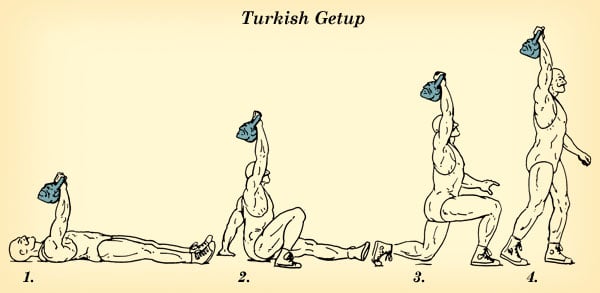
To keep it simple. The TGU can be broken down into three parts.

  • The half get-up;
  • The transition; and
  • The full get-up.

TGU: The starting position
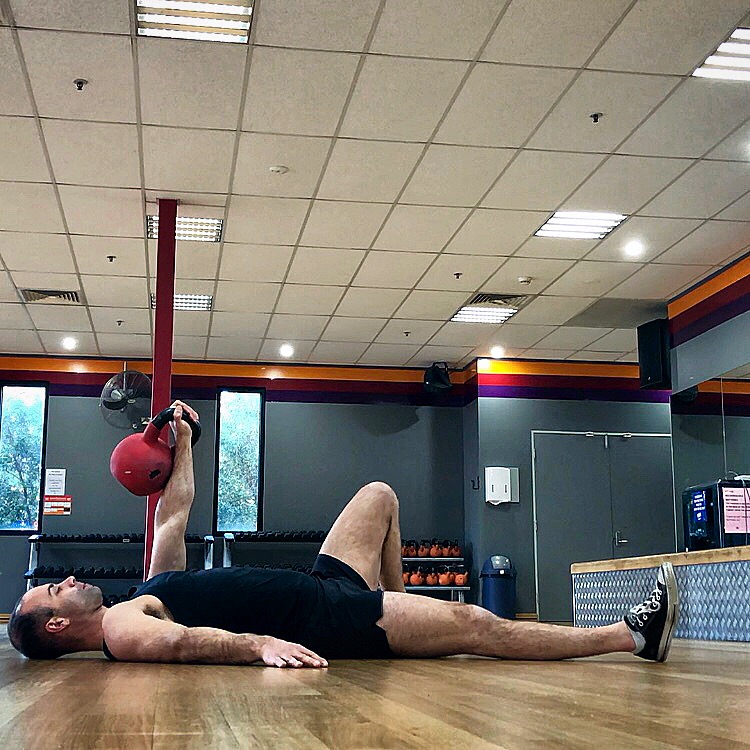
Lying on your back, extend the arm holding the kettlebell in front of the chest with the arm locked out. If necessary, you can use your supporting arm to assist the initial lift or spot the weight. The goal is to get the weight into the locked-out position and not to build a big chest by pressing.

Post your left foot flat on the ground, with your heel close to your backside. This is the starting position. Remember to keep your eyes on the kettlebell throughout the exercise.

IMG_3012

TGU: The half get-up
From the starting position, with your supporting hand flat on the ground, roll slightly to your right side and sit up. Allowing the weight to drift forward slightly, then push off your posted foot to help you sit up.

It is acceptable to allow your free arm to assist slightly against the floor in sitting up. Finish with the left arm and kettlebell vertical (above your head), making sure the wrist is tight and elbow locked.

IMG_3013

TGU: The transition
In the transition, the athlete will move from the sitting to the kneeling position.

Begin by pressing the shoulder of your supporting hand (the one on the ground) away from your ear. This is important, but often overlooked step. It puts the shoulder into a strong position. It keeps the shoulder “active”, by keeping it in the socket.

Simultaneously press off your hand and posted foot, lifting your hips off the floor, forming a glute bridge. This will create the space necessary to swing your (right) leg underneath you as you slowly move into a three-point kneeling position.

IMG_3015

TGU: The full get-up
Slowly straighten your torso and pull your right arm up off the ground so that you are in a two-point kneeling position. Keeping your eyes on the kettlebell, and actively pressing the kettlebell straight up toward the ceiling.

Keeping your leg vertical, load your weight onto the heel, contract the outer glute and stand up, pushing the kettlebell up overhead as you straighten.

IMG_3011

From here, pause for a few moments, then reverse the steps under control to lower yourself on to the floor and back into the starting position.

Remember, there is no rush in completing this movement, and at times speed will destroy the movement quality, leading to an even more challenging or even dangerous practice. You will benefit from time under tension. So take your time and get it right.

Finally, always keep your eye on the kettlebell whilst conducting the movement.


Final thoughts
Mastering the TGU is an excellent investment of your time and effort. The TGU can compliment a variety of workout programs giving you many transferable benefits. It is versatile enough to be used as an injury prevention or rehabilitation activity, to a warm-up or even the main lift of your workout.

Personally, it is one of my favourite exercises (in and out of the gym), and has been a staple movement in many of my strength and conditioning programs over the years.

Basic fitness movements

Generally people would think that strength and conditioning training would require a gym, some heavy weights or even machines. This could not be any further from the truth. It is definitely one way get an effective workout, but you can also get a great strength and conditioning results with compound bodyweight movements.

It is a real simple way to introduce a beginner to a fitness routine. I’ve also come across many intermediate and advanced athletes over the years who have used bodyweight training to great success.

Below is a list of some of the basic fitness movements.

Plank

96AF58FB-3A82-485D-8A94-C6AFB1062850

As the names suggests, your body is a plank. Place your hands underneath your shoulders (either arms extended or on your elbows) and ground your toes into the floor and activate (squeeze) your glutes to stabilise your body.

Place your neck and spine in a neutral position, looking about foot ahead of your hands.

Movement standard:

  • Male: 2 minutes;
  • Female: 2 minutes.

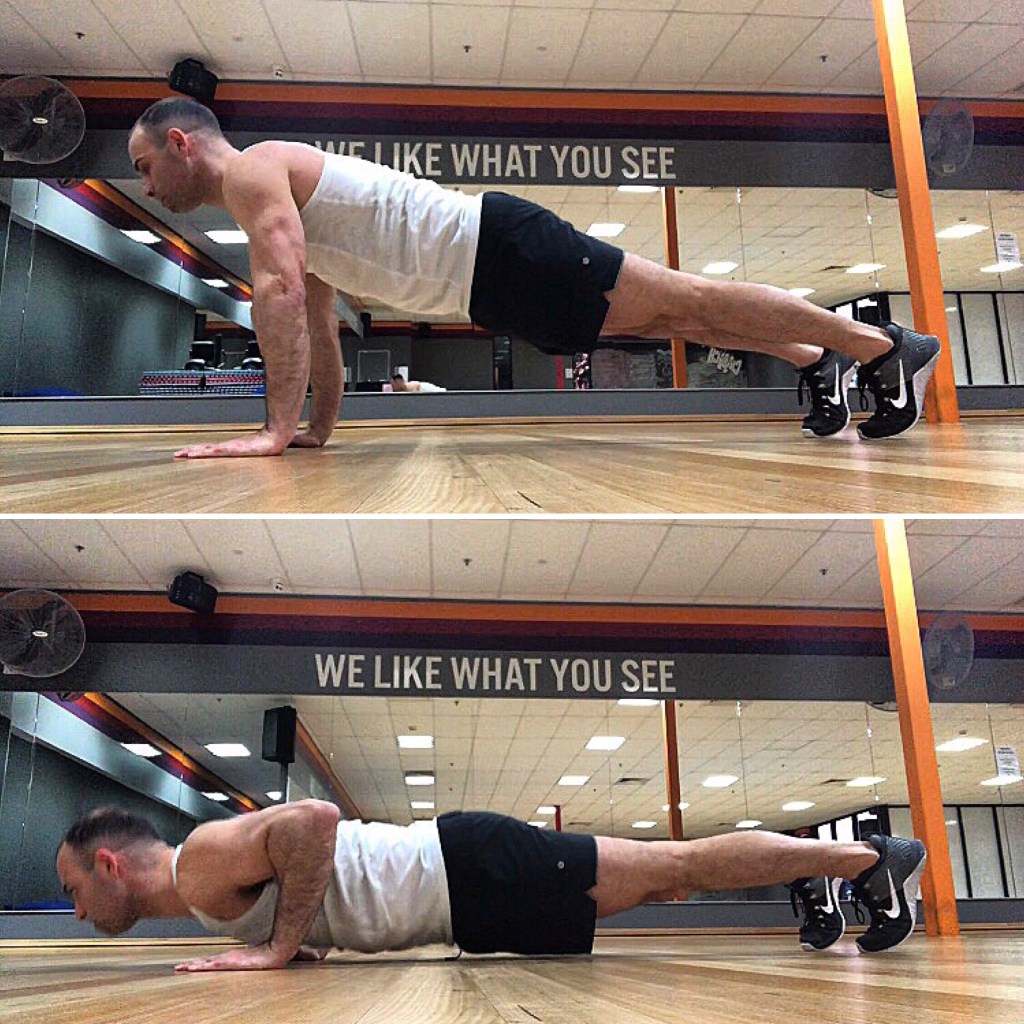
Push up

IMG-Push up
From the plank position, lower your body until your chest touches the ground. Keep your core and glutes tight and a neutral spine and neck. Press your body up again into the plank position.

Movement standard (single set in 2 minutes):

  • Male: 50 push ups;
  • Female: 20 Push ups.

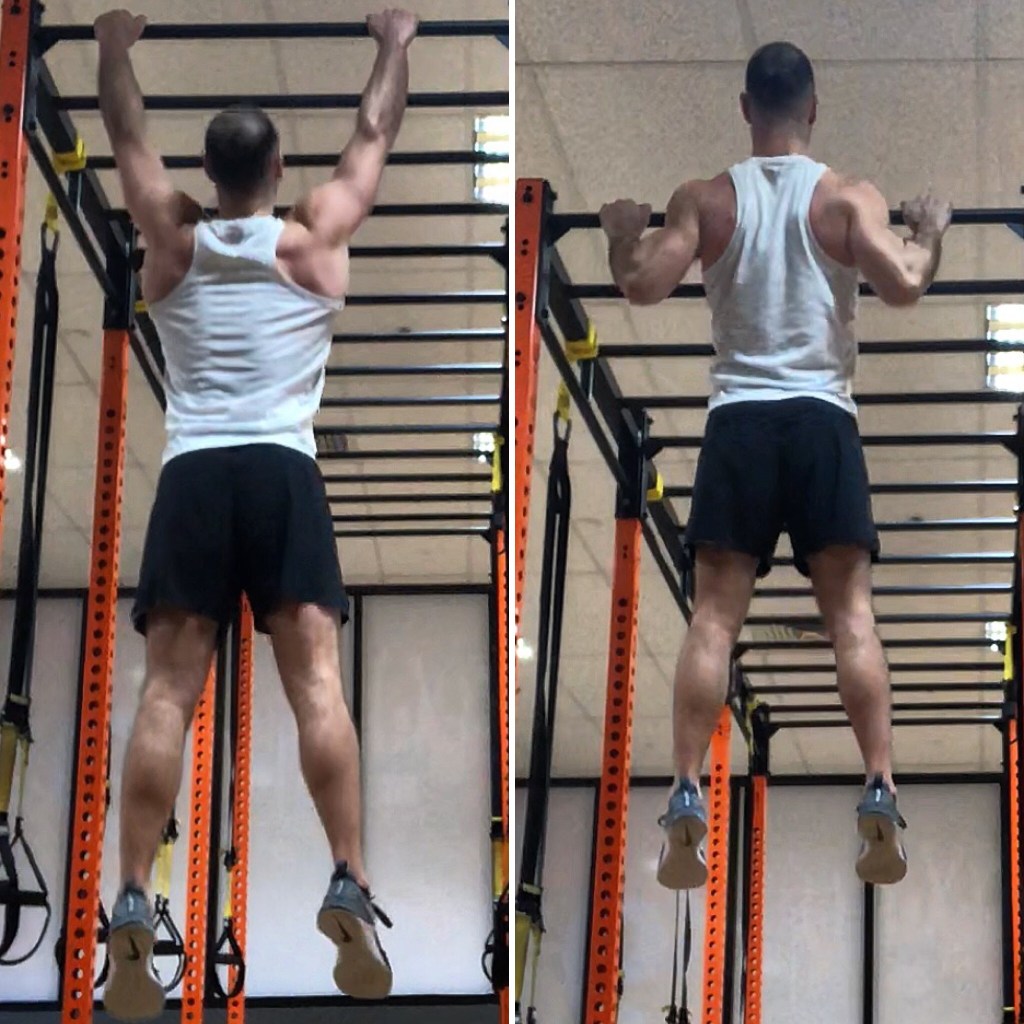
Pull up

IMG-Pull up
Grip the bar at shoulder width (or slightly wider) with an pronated (overhand) grip, then hang from the bar with your arms and legs extended.

Pull yourself up until your chest reaches the bar, focusing on drawing your elbows into the ribs and sliding the shoulder blades down your back. Then, lower yourself down under control until your arms are straight.

Movement standard (single set effort):

  • Male: 10 pull ups;
  • Female: 4 Pull ups.

Air squat

IMG_2938
Feet at or around shoulder width (whatever’s most natural) and toes either forward or pointing slightly outward, lower by pushing your butt back and out until your thighs reach at least parallel.

Keep the weight on the heels and a tight, neutral spine throughout the movement.

Movement Standard:

  • Male: 50 Squats;
  • Female: 50 Squats.

Two or three days per week, after a suitable warmup, for example, some light cardio activity with some range of movement to activate the joints, try to complete a circuit using the four basic bodyweight movements.

Your initial goal should be to aim for the movement standard in each exercise for three rounds, with two minutes rest in-between rounds. Once you have surpassed this standard, try adding another round, decreasing your rest periods or even add some additional functional movements like interval running, the farmer’s walk or another type of weighted carry.

The benefits of Magnesium

Magnesium (Chemical Element)

Magnesium is the fourth most abundant mineral in the human body and the second most common intracellular cation (positively charged ion) after potassium, magnesium is required for the healthy function of most cells in your body, especially your heart, kidneys and muscles.

Magnesium’s benefits can include reduced symptoms from conditions such as chronic pain, fatigue and insomnia. Magnesium may also provide protection from a number of chronic diseases, especially those associated with aging and stress.

Essential to life, necessary for good health, and a vital component within our cells, magnesium’s benefits help our bodies maintain balance, avoid illness, perform well under stress, and maintain a general state of good health.

What conditions can benefit from Magnesium?
Magnesium is known to reduce muscle tension, lessen pain associated with migraine headaches, improve sleep, and address neurological disorders such as anxiety and depression.

Conditions linked to magnesium levels include:

Pain:

  • Headaches;
  • Muscle cramps and spasms.

Mental health and sleep:

  • Anxiety;
  • Depression;
  • Autism and ADHD;
  • Restless Leg Syndrome;
  • Insomnia.

Other conditions:

  • Psoriasis, Acne and Eczema;
  • Asthma;
  • Hypertension (elevated blood pressure);
  • Diabetes;
  • Osteoporosis.

Magnesium works within our cells. The powerhouses, factories and regulators of the body’s systems.

Because it is a necessary part of hundreds of biochemical reactions occurring constantly inside our cells, magnesium’s presence or absence affects the brain, the muscles, and the heart and blood vessels.

The importance of Magnesium?
There are fifteen essential minerals required by our bodies to function properly. These can be divided into trace minerals, those required in very small amounts, and major minerals, those required in larger amounts.

The six major minerals required in excess of 250 mg per day include:

  • Calcium;
  • Magnesium;
  • Potassium;
  • Phosphorus;
  • Sodium;
  • Chloride.

Magnesium impacts nearly all of systems of the body due to its cellular and molecular function. It has vital role as a co-factor to over 300 enzyme functions.

Not only one of the most vital and essential enzyme co-factors, regulating more reactions than any other mineral, but magnesium is also responsible for two of the most important cellular functions: energy production and cellular reproduction.

Magnesium and heart health
Insufficient magnesium tends to trigger muscle spasms, and this has consequences for your heart in particular. This is especially true if you also have excessive calcium, as calcium causes muscle contractions.

Magnesium also functions as an electrolyte, which is crucial for all electrical activity in your body. Without electrolytes such as magnesium, potassium and sodium, electrical signals cannot be sent or received, and without these signals, your heart cannot pump blood and your brain cannot function properly.

The heart has the highest magnesium requirement of any organ, specifically your left ventricle. With insufficient amounts of magnesium, the heart simply cannot function properly. Elevated blood pressure, cardiac arrhythmia, cardiovascular disease (CVD) and sudden cardiac death are all potential effects of magnesium deficiency and/or a lopsided magnesium to calcium ratio.

This systematic review and meta-analysis published in 2013,  concluded that circulating and dietary magnesium are inversely associated with CVD risk. Simply put, this means the lower your magnesium intake (and the lower the circulating magnesium in your body), the higher your risk for CVD.

Other notable effects include:

  • Is an important factor in muscle relaxation and heart health;
  • Creating energy in your body by activating adenosine triphosphate (ATP);
  • Allows nerves to send messages in the brain and nervous system;
  • Aids and regulates the body’s use of calcium and other minerals;
  • Assists in bone and teeth formation;
  • Regulates the metabolism of nutrients such as protein, nucleic acids, fats and carbohydrates;
  • Regulates cholesterol production and helps modulate insulin sensitivity;
  • Assists in energy production, DNA transcription and protein synthesis;
  • Maintains the structural health of cell membranes throughout the body.

Foods high in Magnesium
Magnesium in food sources were once commonly consumed, but have diminished in the last century due to industrialized agriculture and a shifting to more modern westernized diets. Below is a list of foods that are high in dietary magnesium:

  • Pumpkin Seeds;
  • Spinach;
  • Swiss Chard;
  • Dark Cocoa Powder;
  • Almonds;
  • Coffee.

Who should supplement with Magnesium?
Magnesium has been linked to reduced incidence of common conditions such as high blood pressure, diabetes, and metabolic syndrome in large peer-reviewed, long-term studies.

Studies today focus on whether active magnesium supplementation may be one of the missing links to preventing these diseases, as well as several disorders affecting the brain, muscles and skin.

The good news is that magnesium supplementation is a safe and effective way for most people to ensure they are getting enough magnesium to stay healthy, before deficiencies arise.

How much Magnesium to supplement
While the RDI for magnesium is around 310 to 420 mg per day depending on your age and sex, many experts believe you may need around 600 to 900 mg per day.

The 10,000 swing workout

chalkandkb-1024x500

In a nutshell

  • Challenge yourself with four weeks or five of intensive kettlebell swinging to test your grit and improve body composition;
  • At the completion of the program, you will have done 10,000 kettlebell swings dispersed throughout 20 workouts. You’ll do 500 swings per workout;
  • Between sets of kettlebell swings, do one of the following: chin-ups, goblet squats, dips, or overhead presses;
  • Master your kettlebell swing pattern. It’s not a squat. It’s a hip hinge and a hip snap. Your arms should not travel above your shoulders.

Making progress with training
As humans, we thrive when we push our boundaries, reach goals, and beat our personal records. If we’re performing faster, fitter and stronger, we tend to feel more alive.

So, if you want to improve, you have to seek out new challenges, struggle, adapt and overcome.

The 10,000 kettlebell swing workout is a challenge that will rapidly transform your overall body composition in just four or five weeks.


The Program
In four or five weeks, the athlete is going to perform 10,000 proper kettlebell swings. These will be split over 20 workouts. That is 500 swings per workout.

Between sets of swings, the athlete performs a low volume, strength movement. Training either four or five days per week. Training two days on, one day off, then repeat.

  • Men should use a 24kg kettlebell;
  • Women should use a 16kg kettlebell.

Breaking it down. Swing clusters, sets and repetitions
Following this repetition scheme to reach 500 total swings per workout:

  • Set 1: 10 swings;
  • Set 2: 15 swings;
  • Set 3: 25 swings;
  • Set 4: 50 swings.

That is 100 swings completed, or one cluster. Repeat the cluster another four times and you will have completed you’re daily total of 500 swings. Between sets is where more conditioned or experience athletes can add a low volume strength movement.

The strength movements
Use a strength movement with low volume between sets of swings. Some of the best movements are:

  • Overhead Press;
  • Dips;
  • Goblet Squat;
  • Chin-up.

Other movements to consider could be a front squat, weighted pull-ups or even muscle-ups. This is where you can really personalise your program. I would stay with presses or pulls. It is fair to say that after 500 swings per day, you probably won’t feel like adding any extra hip hinge work.

Use a 1-2-3 repetition scheme for most movements. Here is an example using the overhead press:

  • 10 swings
  • 1 press
  • 15 swings
  • 2 press
  • 25 swings
  • 3 press
  • 50 swings
  • Rest for 60 sec.

For the strength movements, use your five repetition max weight. If you’re conducting dips, use a 2-3-5 repetition scheme.

If you choose to lift five days in a week, conduct strength movement on four of the days and pick a day where you will only conduct the swings.

You can use a different strength movement each workout, rotating through the movements mentioned earlier. My preference is to use two days of both overhead presses and pull-ups.

Only use a single strength movement each workout.

Rest
After each set of 10, 15 and 25 repetitions, rest for 60 seconds. After each set of 50 repetitions, extend your rest to three minutes. During this longer rest period, perform some corrective work. Conduct stretches as required, such as in the hips, or lower back. Add in some mobility movements to keep your body loose.

Here is what a sample week could look like:

Day 1

  • 10 Swings
  • Press 1 rep
  • 15 Swings
  • Press 2 reps
  • 25 Swings
  • Press 3 reps
  • 50 Swings
  • Rest 30-60 seconds; repeat 4 more times.

By the end of the workout, you’ll have completed 500 swings and 30 presses.

Day 2

  • 10 Swings
  • Chin-up 1 rep
  • 15 Swings
  • Chin-up 2 reps
  • 25 Swings
  • Chin-up 3 reps
  • 50 Swings
  • Rest 30-60 seconds; repeat 4 more times.

By the end of the workout, you’ll have completed 500 swings and 30 chin-ups.

Day 3 – Rest

Day 4

  • 10 Swings
  • Press 1 rep
  • 15 Swings
  • Press 2 reps
  • 25 Swings
  • Press 3 reps
  • 50 Swings
  • Rest 30-60 seconds; repeat 4 more times.

By the end of the workout, you’ll have completed 500 swings and 30 presses.

Day 5

  • 10 Swings
  • Chin-up 1 rep
  • 15 Swings
  • Chin-up 2 reps
  • 25 Swings
  • Chin-up 3 reps
  • 50 Swings
  • Rest 30-60 seconds; repeat 4 more times.

By the end of the workout, you’ll have completed 500 swings and 30 chin-ups.

Day 6 – Rest

Day 7 – Rest, or begin the cycle again

Swing Technique
There are several variations to complete the kettlebell swing. The two main variations being the American Swing, as seen in Crossfit workouts, and the Russian Swing.

The major difference between the two variations is that the Russian Swing is primarily a hip hinge movement with the kettlebell reaching to roughly chest height, and that the American Swing there is a secondary movement where the kettlebell is pulled overhead.

While there are uses for both variations of kettlebell swings, we will focus on the Russian Swing for this program.

The condition:

Swing the kettlebell between your legs and then in front of you up to chest level for repetitions.

The swing standard:

  • Maintain the box-squat alignment during swings and when picking up or setting down the kettlebell:
    • Keep your head up;
    • Keep a straight – not to be confused with “upright” – back;
    • Sit back, rather than dip down.
  • Extend the hips and knees fully on the top: the body must form a straight line;
  • The kettlebell must form an extension of the straight and loose arm(s) on the top of the swing.

What is next?
Firstly, congratulate yourself for completing this program. If done correctly, it can be  quite the challenge. Well done.

You’ll most likely be in much better shape than you were four or five weeks ago and you should be ready for the next challenge.

Keep swinging.

Why you should be eating bananas

bananas1

Why it’s a superfood?

  • High in vitamins B6 and C, fiber, potassium, mangansese;
  • Good source of riboflavin, folate, magnesium, copper;
  • Contains antioxidant phenols.

Healthy evidence
One of the reasons eating bananas is beneficial is because bananas are high in potassium. Potassium is an electrolyte and we require it to help our bodies function optimally. One banana contains more than 300mg of potassium. The recommended daily intake according to the National Health and Medical Research Council is 3,800mg per day for males and 2,800mg per day for females.

Bananas are high in potassium, a mineral that promotes heart health and normal blood pressure. This meta-analysis published in 2011, found that a daily consumption of 1,300-1,400mg of potassium is linked to 26% lower risk of heart disease.

In addition, bananas contain antioxidant flavonoids that have also been associated with a significant decrease in the risk of heart disease.

Making the most of Bananas
The high content of heat-sensitive and water soluble vitamins B6 and C means that fresh bananas are the best choice (vitamin B6 may decrease by as much as 50% if heated). For added nutrients, combine bananas with fruit high in vitamin A, such as mango or peach and mix with cottage cheese to add slow digesting protein.

Bananas and athletic performance
The unique mix of vitamins, minerals, and low glycemic carbohydrates in bananas has made them a favorite fruit among endurance athletes.

Bananas have long been valued by athletes for prevention of muscle cramps. Since bananas are a good source of potassium, and since low potassium levels are known to contribute to risk of muscle cramps, it is logical to think that the potassium content of bananas as being a contributing factor for a reduction in muscle cramps whilst conducting physical activities.

When is the best time to eat bananas
Generally, the taste and nutritional value of bananas change as they ripen.

Pre-ripened bananas tend to have greener skins and are less sweet than well-ripened bananas because the starch hasn’t fully broken down into simple sugars. The upside to eating pre-ripened bananas is that you stay full for longer and enjoy the benefits of the resistant starch.

On the other hand, a well-ripened banana with some dark patches on the skin is easier to digest and may give you the energy boost you require before playing sports.

What is Overtraining?

a04440_9cb17a531d64432382bfef41d23d5734

Recovery is one of the key components to high performance in sports but is rarely appreciated by most athletes ranging from the weekend shuffler to the elite level endurance athlete. Conventional wisdom would suggest that the road to success is hard workouts, and the more the better.

A highly motivated athlete, no matter how elite, who has placed recovery on the back burner, will soon enough experience total fatigue. Waking up in the morning tired, unable to complete the easiest of training sessions. This can go on for days, weeks or even months. You’re overtrained.

How Overtraining can occur
Below is a list of just some of the reasons an athlete could become overtrained:

  • Inadequate recovery between training sessions;
  • Too much high intensity training, typically for too long;
  • Sudden drastic increases in distance, length, or intensity of exercise routine;
  • Daily intense weightlifting;
  • High volumes of endurance training;
  • No vacations, breaks, or off-seasons;
  • For athletes, excessive competition at high levels (i.e. trying to win every race);
  • Inadequate nutrition, typically in the form of caloric and carbohydrate/fat restriction;
  • Insufficient sleep;
  • High amounts of stress and anxiety.

Common Symptoms of Overtraining
There are many symptoms of overtraining, ranging from physiological to biochemical or even a compromised immune system. Here are some of the more common signs and symptoms of overtraining.

Physiological and Psychological

  • Decreased performance;
  • Decreased strength;
  • Decreased work capacity;
  • Changes in heart rate at rest, exercise and recovery;
  • Increased frequency of breathing;
  • Insomnia;
  • Loss of appetite;
  • Increased aches and pains;
  • Chronic fatigue;
  • Depression;
  • Apathy;
  • Decreased self-esteem;
  • Difficulty concentrating;
  • Irritability.

Immunological

  • Susceptibility to illness;
  • Slow healing of minor scratches;
  • Swollen lymph nodes.

Biochemical

  • Negative nitrogen balance;
  • Flat glucose tolerance curves;
  • Reduced muscle glycogen concentration;
  • Decreased hemoglobin;
  • Decreased iron serum;
  • Mineral depletion;
  • Elevated cortisol levels;
  • Low free testosterone.

Overcoming Overtraining
The only way to overcome overtraining is adequate rest along with sound nutrition. Overtraining usually results from training mistakes, most commonly is an imbalance between stress and rest. This usually occurs as an athlete suddenly increases their training workload in either volume or intensity, sometimes both.

Overtraining can be avoided by following a long-term, structured training program that has scheduled rest and recovery days. A reduction in workload for a single training week, every 6-8 weeks is also very beneficial. Taking the time out to reduce both mental and physical stressors of the modern world can help with recovery.

Training programs should be unique to the individual athlete, taking into consideration, age, experience, susceptibility to illness and injury, along with any personal goals.

Iliotibial Band (ITB) Syndrome – Is your ITB killing you?

If you’re an active person, and especially if you’re a runner, Iliotibial Band (ITB) Syndrome is one of the most common overuse injuries that can sideline you. Though many people suffer from ITB Syndrome, few understand what it is and how to treat it.

If you’ve ever had ITB Syndrome, then you know how much it can hurt, and how it feels like it’s never going to go away.

It’s one of those pains in your knee or the outside of your leg where you go out for a run or a ride, and have to limp home. Many suffer with this injury for months. It’s like a knife digging into the side of your leg or knee. The ITB is an extension of a short muscle on the side of your hip called the Tensor Fascia Lata (TFL) as well as your gluteus maximus (glute max) muscle, (that’s your behind). The ITB extends from the TFL and glut max down to the outside of your knee.

iliotibial-band-syndrome

Symptoms
Pain occurs anywhere along the ITB, usually at the insertion (by the knee) or somewhere in the middle. You’ll have pain running, riding or walking [usually down] stairs, and anytime you try to bend your leg, especially after keeping it straight for a while.

Sometimes, even waking up in the morning will be like an ice-pick in your leg. If you’ve ever had an ITB problem, you probably went through a whole slew of treatments and still had it for 3-6 months; that is very common and no fun.

Causes
ITB Syndrome occurs typically from the following reasons:

  • Often there is an actual weakness of the TFL or glute max itself. 75% of the ITB is made up of  the glute max – the major muscle you use to jump, climb, squat, run, ride your bike, and even just to get out of a chair;
  • A muscular imbalance between the inside and the outside of the leg;
  • One or both of those muscles could have fatigued from wearing the wrong type of shoes or orthotics;
  • An old injury that is still haunting you, but you don’t know it because the pain is gone, but your body has compensated;
  • An insulin issue from eating too many carbohydrates creating a gait disturbance, or even from a digestive problem, (gut inflammation can inflame the ITB);
  • Overtraining.

Treatment
Once you notice ITB pain, the best way to get rid of it is to rest immediately. That means fewer miles, or no running at all. While you’re backing off on your mileage, you can cross-train. Swimming, pool running, cycling, and rowing are all fine. If you diagnose an ITB problem early enough treatment can be as simple as rest, massage and stretching.

Medical treatment is cortisone shots and NSAIDs (Non-steroidal anti-inflammatory drugs) for inflammation and if that doesn’t help, then surgery can be recommended to cut and release the band (in severe cases).

Other keys to treating ITB and speeding a healthy return to the track are as follows:

  • Stop running. It’s simple – if it hurts to run, don’t run.
  • Increase strength. Simple exercises to strengthen the glutes, quadriceps, hamstrings and core muscles can aid a speedy return to the track.
  • Massage the injured area. Using a foam roller and/or a tennis ball to work out tightness in my glutes, quadriceps, ITB, hamstrings and hips.
  • Better quality sleep. Most recovery and healing happens when you’re asleep. Aim for 8 or 9 hours minimum of quality, unbroken sleep.

How baking soda can improve athletic performance

SodiumBicarbonate

Sodium bicarbonate (baking soda) otherwise known as NaHCO₃, is a popular chemical compound. It is a salt composed of sodium ions and bicarbonate ions. Sodium bicarbonate is a white solid that is crystalline but often appears as a fine powder. It is found dissolved in many mineral springs.

Baking soda is a low-cost natural product that can be found in most supermarkets.

How does sodium bicarbonate work
To understand how baking soda works, it is helpful to first understand the concept of pH.

How pH affects athletic performance
In chemistry, pH is a scale used to grade how acidic or alkaline (basic) a solution is.

A pH of 7.0 is considered neutral. Anything lower than 7.0 is acidic and anything above that is alkaline.

In a normally functioning, resting human being, arterial blood pH is approximately 7.4, slightly alkalotic, and usually around 7.0 in the muscle cells. You function best when your acid-alkaline balance remains close to this target, which is why your body has various ways to maintain these levels.

High-intensity exercise, also known as anaerobic exercise can disrupt this balance.

During anaerobic exercise, your body’s demand for oxygen exceeds the available supply. As a result, your muscles cannot rely on oxygen to produce energy. Instead, they must switch to a different pathway. The anaerobic pathway.

Creating energy through the anaerobic pathway produces lactic acid. Too much lactic acid decreases your muscle cells’ pH level to below the optimal 7.0.

How sodium bicarbonate helps maintain pH
Sodium bicarbonate has an alkaline pH of 8.4 and can therefore raise your blood pH slightly. Higher blood pH allows acid to move from muscle cells into the bloodstream, returning their pH to 7.0. This enables the muscles to continue contracting and producing energy.

Scientists believe this is the primary way that sodium bicarbonate can help you exercise harder, faster or for longer

Sodium bicarbonate and athletic performance
In short endurance events lasting approximately seven minutes or less, one of the greatest challenges faced by an athlete is the build-up of acidity related to acid production by the muscles (lactic acid). As the blood and fluids surrounding the muscle cells become more acidic, their ability to function effectively is greatly reduced.

Since the 1940s, sports scientists have been looking at baking soda, as a way of counteracting this acidity.

Baking soda has been shown to reduce blood and muscle acidity by neutralising hydrogen ions associated very high intensity efforts. A review of 29 studies examined the time to exhaustion in short duration events and found an average 27 percent increase in exercise duration with baking soda compared to placebo.

Although most studies investigating the effectiveness of supplementing with baking soda  for enhancing athletic performance have mainly been focused on physical activity lasting approximately seven minutes or less, there have been numerous studies focusing on more prolonged continuous exercise with similar outcomes.

How much to supplement 
If you compete in short races or conduct intensive interval training at or above your aerobic capacity, supplemental dosages of 200-300mg/kg (about 4 or 5 teaspoons) mixed into about 500ml of water have shown to be beneficial when used before exercise. Baking soda should be sipped over a few minutes approximately 60 minutes prior to the race or workout.

Health benefits
Other health benefits of supplementing with baking soda include:

  • Ease stomach and digestive troubles;
  • Reduce heartburn;
  • Boost kidney health;
  • Sunburn remedy;
  • Toothpaste and teeth whitener;
  • Relief from insect bites;
  • Help to clear/relieve cold and flu symptoms.

Adverse effects
Although consuming baking soda orally is safe, don’t exceed the recommended dosage. Too much baking soda can upset the body’s acid-base balance leading to nausea, vomiting and diarrhoea.

Another reason not to overdo your consumption of baking soda is that it can increase potassium excretion which could lead to a potassium deficiency.

Baking soda is high in sodium, approximately 1,200 milligrams in one teaspoon. So higher doses may not safe, especially if you have elevated blood pressure.

You should always consult with your doctor prior to using a new supplement, especially if you are on medication.

Final thoughts
For such a low-cost, this is one really affordable natural supplement that could help enhance an athlete’s physical performance, especially in events lasting seven minutes or less.

In addition, baking soda has a variety of other health benefits. For example, it can help treat heartburn, ease digestive issues and even whiten your teeth.